Data Protection Officer
Appointment of a qualified, externally placed Data Protection Officer (DPO) to oversee your organisation's PDPA compliance — mandatory for all organisations collecting personal data.
Protect personal data more effectively and strengthen compliance with practical PDPA support tailored to your organisation’s needs.
i-2 Communications is a partner of the PDPA Compliance Group.
The PDPA Compliance Group is an organisation of independent experts in personal data protection. These experts are professionally trained and committed to helping organisations in Singapore comply with the PDPA.
Together, we provide a comprehensive suite of PDPA compliance services across Singapore and Asia — from appointing your Data Protection Officer to managing data incidents and audits.
Contact Us Today
The PDPA Compliance Group provides a comprehensive suite of PDPA services in Singapore and Asia.

Appointment of a qualified, externally placed Data Protection Officer (DPO) to oversee your organisation's PDPA compliance — mandatory for all organisations collecting personal data.
Development of a comprehensive, PDPA-aligned data protection policy tailored to your organisation's structure, data flows, and operational requirements.
Preparation of practical procedures, processes, and practices for ongoing PDPA compliance — covering data collection, retention, access controls, and disposal.
Regular, structured training sessions for employees on the importance of data protection, proper personal data handling, phishing risks, and PDPA obligations in Singapore.
Review of contracts with third-party vendors who process personal data on your behalf — ensuring they are contractually committed to PDPA-compliant data handling standards.
Independent audit of your data protection systems to identify compliance gaps — plus PDPA incident management to detect, respond to, and report data breaches in a timely manner.
The Singapore Personal Data Protection Act 2012 (PDPA) is a law that governs the collection, use, and disclosure of personal data by all organisations.
Organisations in Singapore that fail to comply with PDPA may be fined up to $1 million and suffer serious reputation damage.
The PDPA covers all electronic and non-electronic personal data, regardless of whether the personal data is true or false.
The PDPA recognises both the need to protect individuals' personal data and the need of organisations to collect, use, or disclose personal data for legitimate and reasonable purposes.
A data protection regime is necessary to safeguard personal data from misuse and to maintain individuals' trust in organisations that manage their data.
By regulating the flow of personal data among organisations, the PDPA also aims to strengthen Singapore's position as a trusted hub for businesses.
Speak to a PDPA ExpertOrganisations in Singapore should comply with the Personal Data Protection Act (PDPA) for several important reasons.
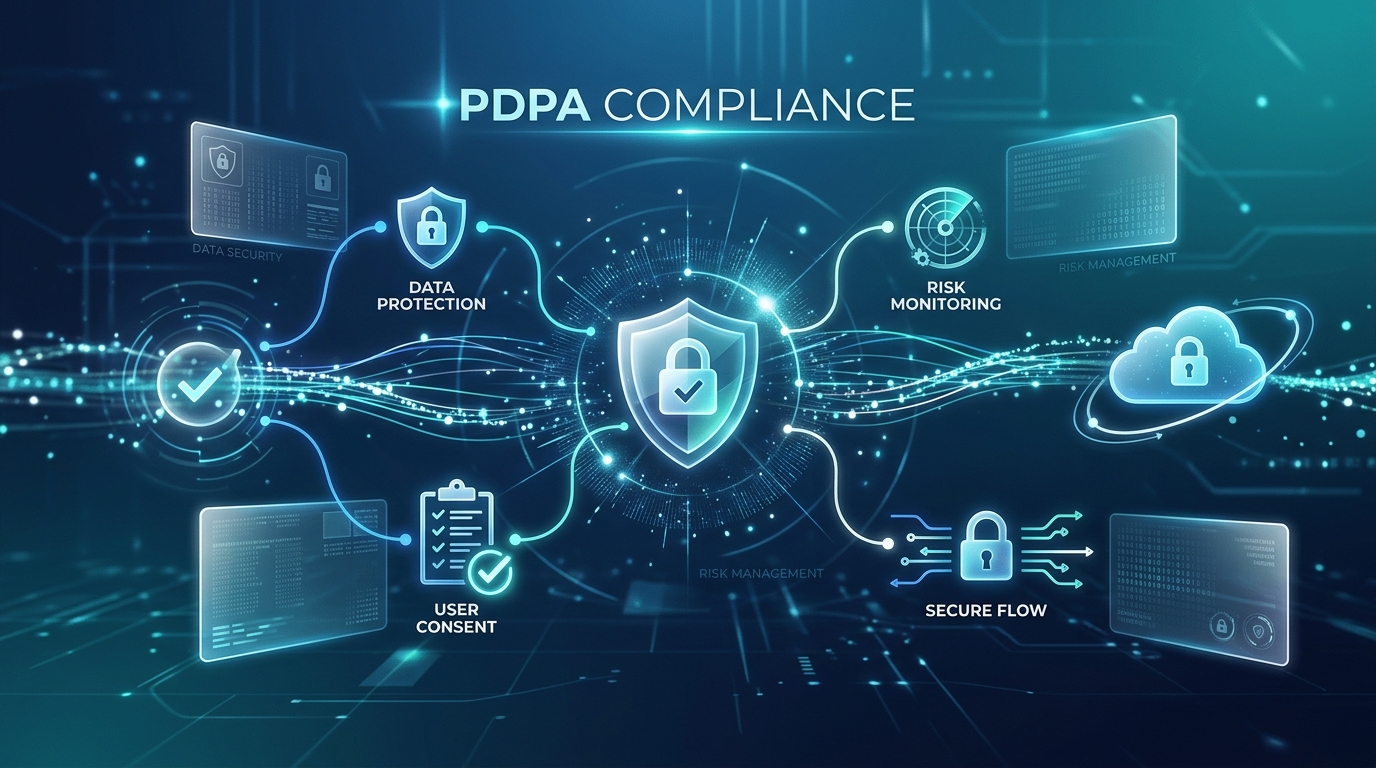
Compliance with the PDPA is a legal requirement for organizations that collect, use, and disclose personal data in Singapore. Non-compliance can result in penalties, fines, or even imprisonment.
Compliance with the PDPA can enhance an organisation's reputation as one that respects the privacy and confidentiality of its customers and employees, building trust and confidence among stakeholders.
Compliance with the PDPA can provide a competitive advantage in the marketplace by demonstrating that the organization is committed to protecting personal data and complying with best practices in data protection.
Compliance with the PDPA can help to ensure business continuity by reducing the risk of data breaches and other incidents that can result in financial losses, damage to reputation, and legal liabilities.
Compliance with the PDPA can also help organisations to comply with other international data protection laws and regulations, particularly those based on similar principles such as the EU's General Data Protection Regulation (GDPR).
The DPO plays a critical role in ensuring your organisation complies with the PDPA and processes personal data responsibly.
Under the Personal Data Protection Act 2012 (PDPA), a Data Protection Officer (DPO) is mandatory when your company/organisation is collecting personal data during its operations. A DPO of your company can be one individual or a team to ensure its compliance with the PDPA of Singapore.
The following are examples of organisations required to appoint a DPO:
A DPO must be competent in data protection, adequately resourced, and report to the highest management level. A DPO can be an existing employee or externally appointed.
In Singapore, Data Protection Officers (DPOs) play a critical role in ensuring that organisations comply with the Personal Data Protection Act (PDPA). The key responsibilities of a DPO include:
Providing advice and guidance to management and employees on matters related to the protection of personal data, including compliance with the PDPA and related regulations.
Ensuring that the organisation complies with the PDPA and related regulations — including reviewing policies and procedures, conducting data protection impact assessments, and monitoring data breaches.
Conducting regular training sessions for employees to educate them on the importance of data protection and the proper handling of personal data.
Maintaining a clear plan for responding to data breaches, including notifying affected individuals and the Personal Data Protection Commission (PDPC) in a timely manner.
Serving as the main point of contact between the organisation and the PDPC on matters related to personal data protection, including responding to queries and notifying the PDPC of any breaches.
Identifying and analysing risks associated with data processing activities and recommending measures to mitigate them.
Developing, implementing, and reviewing data protection policies and procedures that align with the PDPA and provide clear guidance on handling personal data.
Handling requests from data subjects — including requests for access, correction, and deletion of personal data — in a timely and compliant manner.
Regularly auditing the organisation's data protection practices to identify any gaps or areas of improvement and stay compliant with the PDPA.
Maintaining records of the organisation's data processing activities — including types of personal data collected, purposes for processing, and any third-party disclosures — available to the PDPC upon request.
From 1 October 2022, for any breach of the PDPA, an organisation that breaches the PDPA may face fines of up to: SGD 1 million; or, where the organisation's annual turnover in Singapore exceeds SGD 10 million, 10% of the organisation's Singapore turnover.
Penalties imposed under the PDPA could potentially be more stringent compared to the GDPR, which currently imposes fines of up to €20 million or 4% worldwide turnover, whichever is higher.
The new PDPA also makes it a criminal offence for individuals (including employees) to mishandle personal data or re-identify anonymised information without authorisation.
The PDPA does not apply to business contact information, which may include name, business title, corporate telephone numbers, business addresses, and business email addresses.
Such contact information is made publicly available to facilitate commerce and trade. Organisations will not be required to obtain consent prior to collection, use, or disclosure.
In addition, organisations sending business-to-business (B2B) marketing messages through phone calls, SMS, or fax are not required to comply with the Do Not Call provisions.
Ensure Your Compliance NowOr 10% of Singapore annual turnover for organisations with turnover exceeding SGD 10 million — effective from 1 October 2022.
Criminal offence for individuals — including employees — who mishandle personal data or re-identify anonymised information without authorisation. Fine up to SGD 5,000 and/or imprisonment of up to two years.
The PDPA does not apply to business contact information (name, title, corporate phone, business address, business email). B2B marketing messages via phone, SMS, or fax are also exempt from Do Not Call provisions.
Organisations that have completed PDPA training and compliance programmes with our expert, Mr. Gea Ban Peng, CEO of PDPA Compliance.
I am impressed by the powerful personal brand image that he projected naturally and effortlessly. People who have attended his courses will agree that he is totally committed to delivering on his promise without compromise, to ensure his trainees get great value for their fees and they thoroughly enjoyed the PDPA program.
I attended the PDPA training conducted by Mr. Gea Ban Peng, CEO of PDPA Compliance. He showed mastery of the subject, provided relevant case studies, and shared great insights on applying the PDPA to the operations of a business enterprise. His training material contained valuable resources, templates, and detailed guidance and steps to take to fulfil our obligations under the PDPA.
I attended the PDPA training conducted by Gea Ban Peng. He showed mastery of the subject. He provided great insights on how the PDPA is applied on the operational level of a business enterprise. His training material contain valuable resources, templates, and guidance on the steps to take to fulfil our obligations under the PDPA.
Practical guides to help your business grow with AI, lead generation, and digital marketing.
Our team of PDPA compliance experts is ready to help your organisation achieve full compliance — from appointing a DPO to training your staff and auditing your systems.
Get in touch today and take the first step towards protecting your customers' data and your organisation's reputation.
Tell us about your PDPA compliance needs and we'll get back to you within 1 business day.
By submitting, you agree to our Privacy Policy and PDPA Compliance practices.
Thank you — our PDPA compliance team will be in touch within 1 business day.