
If your strategy treats “Asia” like a single checkbox on a go-to-market slide, you’ll feel it in the numbers: high traffic, low intent, and leads that don’t go anywhere. The reality is simple—Asia is a region of wildly different business norms, languages, procurement styles, and decision-making structures. What sounds crisp and persuasive in Singapore may come across too direct in Japan. What converts fast in India may need more consensus-building in Korea. Same product, totally different path to “yes.”
Localization starts with understanding the buying culture, not just translating a landing page. For example, hierarchy and risk tolerance vary a lot across markets. In some places, the buyer wants a quick ROI story and a straightforward pilot. In others, stakeholders may expect extensive validation, references, and careful internal alignment before committing to even a small test. That changes everything—your messaging, your nurture cadence, your proof points, even who you target first.
A localized approach also helps you avoid costly category confusion. Certain terms, value propositions, or product categories are interpreted differently depending on market maturity. If you don’t align your positioning with how buyers in that country frame the problem, you’ll end up educating from scratch—expensive, slow, and frustrating.
This is why B2B Lead Generation for Asia works best when it’s built market-by-market: local personas, local objections, local “trust triggers,” and local conversion paths. It’s not extra work for the sake of it—it’s the work that makes the whole engine run.

The “Right Channels” Change by Country—And That’s Not Optional
In B2B, channel fit is half the battle. And in Asia, channel fit changes dramatically from one country to the next. If you’re running the same playbook everywhere—same platforms, same content formats, same outreach style—you’re basically gambling with your pipeline.
LinkedIn might be a primary channel in some markets, while in others it plays a supporting role. Messaging apps and community-based networks often carry more weight than global teams expect, because that’s where business relationships and introductions actually happen. Even search behavior differs: what people type, how they research vendors, and how they validate credibility can vary based on language and local norms.
Here’s the kicker: it’s not just “where you advertise,” it’s how people prefer to engage. Some markets respond well to educational webinars and whitepapers. Others lean toward short, practical explainers, local case studies, or in-person events and partnerships. Distribution ecosystems differ too—local associations, chambers, and industry communities can outperform broad digital targeting when trust is a deciding factor.
So what should you do instead of guessing? Build a channel map per market:
- Primary acquisition channels (search, social, partners, events)
- Primary “trust channels” (communities, referrals, local media, industry bodies)
- Preferred content formats (case studies, comparison pages, demos, workshops)
- Preferred conversion actions (demo, consult call, WhatsApp/LINE inquiry, event signup)
A helpful mindset is: don’t force your audience onto your favorite platform. Meet them where they already do business, then guide them into a conversion path that feels natural.
Trust Signals Aren’t Universal—They’re Local (and Sometimes Personal)
In many Asian B2B markets, trust isn’t a soft concept—it’s the currency. Buyers often weigh “vendor credibility” just as heavily as features and pricing, especially when switching costs are high or the service touches core operations. And here’s the tricky part: what builds trust in one country may not land the same way in another.
Global proof points (big-name logos, generic testimonials, awards) can help, sure—but localized proof points usually convert better. Local case studies, references in the same country, and region-specific compliance and service assurances often matter more than broad claims. Even small details—local phone numbers, local office presence, language-appropriate customer stories—can reduce friction fast.
Also, relationship-building can be a central part of the buying process. In some markets, buyers want to “get a feel” for the team before progressing. That may mean more introductory calls, more stakeholder sessions, and more emphasis on responsiveness and after-sales support. A super aggressive “book a demo now” CTA can feel pushy, while an offer like “30-minute consult to assess fit” may be more aligned.
Practical trust builders you can localize:
- Country-specific case studies and measurable outcomes
- Local partner ecosystem (integrations, resellers, associations)
- Clear service coverage (time zones, support language, response times)
- Security and compliance explanations written for local expectations
- Thought leadership that references local industry realities
If you want a shortcut, borrow from cultural research frameworks (like Hofstede Insights: https://www.hofstede-insights.com/) to sanity-check tone and persuasion style. Don’t stereotype—just use it as a guardrail so you don’t accidentally communicate “we don’t get you.”
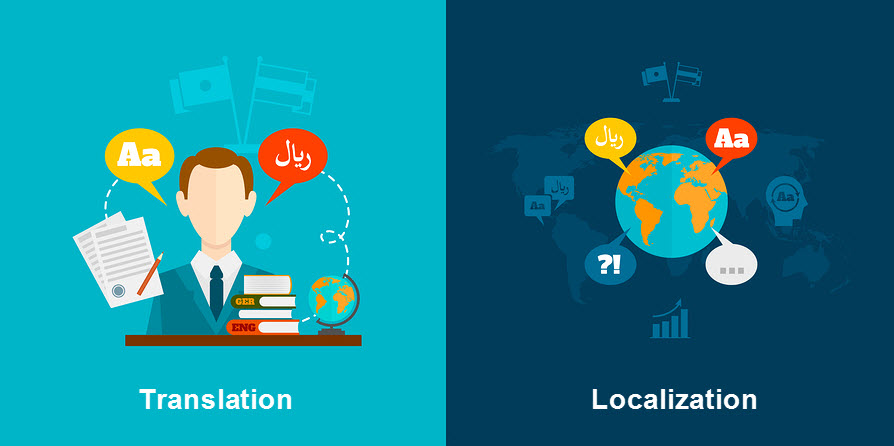
Translation Isn’t Localization—Your Value Prop Must “Sound Right”
A direct translation can be technically correct and still feel… off. That’s because localization is about meaning, not words. In B2B, your value proposition has to click quickly: “They understand my problem, and they can fix it.” If your messaging feels foreign, overly generic, or too “global-corporate,” buyers may bounce before you even get a chance.
Start by localizing the problem statement. Pain points vary by market maturity and industry realities. One country may be focused on speed and scale. Another may prioritize quality control, risk reduction, or long-term reliability. Your headlines, hero copy, and proof points should reflect the local version of the problem, not your internal product narrative.
Then localize the outcomes. “Efficiency” is universal, but what it means isn’t. Some buyers want fewer manual steps. Others care about governance, audit trails, or predictable operations. Even ROI framing changes: some markets respond well to direct cost savings, while others prefer value framing around risk, reputation, and continuity.
Also—pricing and packaging. If your funnel pushes a pricing model that conflicts with local procurement habits (contract length, billing expectations, payment terms), leads can stall at the finish line. Localization here doesn’t mean discounting; it means packaging your offer in a way that fits how purchasing works locally.
A practical way to do this is to create a localized messaging matrix per market:
- Top 3 pain points (local phrasing)
- Top 3 outcomes (local business language)
- Top objections (and the proof that removes them)
- Best CTA (demo, consult, pilot, assessment)
Do that well, and suddenly your ads and landing pages stop feeling like imported templates—and start feeling like a trusted local solution.
Localize the Funnel Mechanics—Or Great Leads Will Leak Out
Even if your targeting and messaging are perfect, funnel friction can quietly kill conversions. Small operational mismatches add up: forms that ask for the “wrong” details, follow-up delays that miss working hours, email sequences that ignore local holidays, and SDR scripts that feel too blunt or too vague.
Start with the basics: your lead capture experience should feel familiar. Use the right field formats (names, phone numbers), the right language variants, and the right default assumptions (time zone, currency, job titles). Don’t over-gate content where trust is still forming. And be careful with overly long forms—some markets will drop off fast if the ask feels intrusive too early.
Next, fix speed-to-lead and handoff. In many B2B motions, response time heavily influences conversion. If your follow-up lands 12 hours later because your team sits in a different time zone, you’re giving competitors a free head start. A localized strategy usually includes either local coverage or a “follow-the-sun” workflow so leads are contacted quickly and in a culturally appropriate tone.
Finally, localize nurture. Your drip emails, retargeting, and content offers should match local decision cycles and evaluation habits. Some markets want more proof before they talk. Others want a quick call and a tailored proposal. Build nurture tracks per market and segment, then measure performance separately—blending everything into one regional dashboard can hide what’s actually working.
Done right, B2B Lead Generation for Asia becomes predictable: fewer wasted leads, stronger qualification, and a pipeline that grows because your funnel fits the way buyers in each market actually behave.

Local Partnerships and Ecosystems Drive Faster Credibility Than Cold Awareness
In many Asian markets, trust travels through networks. That doesn’t mean digital channels don’t work—they absolutely do—but partnerships often accelerate credibility in a way ads can’t. A warm introduction from a known association, technology partner, distributor, or industry community can move you from “unknown vendor” to “shortlist contender” in a single step.
The reason is simple: buyers want to reduce risk. When a respected local entity validates you—formally or informally—it compresses the evaluation cycle. This matters even more in industries with compliance requirements, long procurement processes, or high operational impact (think finance, healthcare, manufacturing, logistics). A localized lead generation strategy should include ecosystem mapping, not just targeting.
What does that look like in practice? Start by identifying where your ideal buyers already gather:
- Industry associations and chambers of commerce
- Local tech ecosystems (cloud marketplaces, integration partners, MSPs, VARs)
- Trade events and executive roundtables
- Niche communities and professional groups tied to your vertical
- Publications or podcasts that influence decision-makers in that country
Then create co-marketing motions that feel genuinely useful—joint webinars, market-specific playbooks, benchmarking reports, or even “how-to” workshops that help prospects solve a real problem before you ever pitch. The goal isn’t to slap logos on a landing page; it’s to borrow trust and deliver value in a way that makes follow-up conversations natural.
Partnership-led demand gen is also a smart way to localize content without guessing. Local partners understand the language nuance, the hot-button issues, and what buyers consider credible evidence. Done well, this approach increases lead quality, raises conversion rates, and reduces the time sales spends “educating from zero.”
Measure by Market, Not Just Region—Because “Asia Average” Can Mislead You
One of the biggest mistakes in regional B2B growth is reporting performance as a blended “Asia” view. It feels tidy, but it can hide the real story. A strong-performing market can mask weak conversion elsewhere, and a poor-performing market can make you think the whole strategy is broken when it’s actually a localized mismatch you can fix.
Localization isn’t only creative—it’s analytical. You need market-level visibility across the funnel: channel performance, cost per qualified lead, demo-to-opportunity rate, sales cycle length, win rate, and expansion potential. When you track those by country (and ideally by segment), patterns pop out quickly. Maybe your Singapore campaigns generate fewer leads but far higher conversion. Maybe your India volume is high but qualification is inconsistent. Maybe Japan needs more mid-funnel proof content before demos convert. Those aren’t “problems”—they’re instructions.
A strong measurement approach also respects local realities:
- Different holiday calendars affect campaign timing and response rates
- Different time zones affect speed-to-lead and meeting show rates
- Different platforms affect attribution quality and intent signals
- Different buyer committees affect the number of touches required
So instead of forcing uniform KPIs across all markets, build a shared framework with market-specific benchmarks. Keep the same core funnel definitions (so the business can compare performance), but allow localized optimization targets that reflect how buyers in that country behave.
This is where B2B Lead Generation for Asia becomes scalable rather than chaotic. When you localize both execution and measurement, you stop arguing with the data—and start using it to make smarter, faster decisions market by market.


