

One of the most common reasons campaigns flop is treating Asia like a single, uniform audience. It’s not. Buying cycles, decision hierarchies, language preferences, and trust signals vary wildly between Singapore, Japan, South Korea, India, and Indonesia. A message that feels crisp and direct in one market can come off as pushy—or vague—in another. When teams run one ad set, one landing page, and one outreach sequence across multiple countries, performance usually collapses into “meh clicks” and “empty leads.”
The lesson? Segment like you mean it. Start with country-level or cluster-level strategies, then tailor by industry and role. Even a lightweight localization plan can be the difference between noise and pipeline.
Practical adjustments that prevent avoidable failure:
- Build separate ICPs by market (budget owner, influencer, technical evaluator).
- Localize your proof points (case studies that match geography or regional pain points).
- Adjust your CTA to the market’s comfort level (e.g., “request a demo” vs. “get a benchmark report”).
- Price and packaging: what works in one country may trigger sticker shock or skepticism elsewhere.
If you want a structured, market-aware approach, anchor your plan around B2B Lead Generation for Asia—not as a generic concept, but as a practical framework for segmentation, localization, and execution. The big takeaway is simple: campaigns fail less often when they’re designed for real on-the-ground buying behavior, not a spreadsheet version of “Asia.”

“It’s English, So It’s Fine”… Until It Isn’t: Messaging That Misses the Room
Another classic failure pattern: the campaign is technically understandable, but it doesn’t feel “for me.” In Asia’s B2B landscape, especially in markets where English is used professionally, teams assume they can reuse Western messaging with minor edits. The result? Flat response rates because the value proposition doesn’t match local priorities, and the tone doesn’t match local expectations.
What usually goes wrong: the copy leans too heavily on hype (“game-changing,” “revolutionary”), pushes urgency too early, or skips the practical details buyers want before taking a call. In many industries, prospects aren’t looking for big claims—they’re looking for risk reduction, credibility, and a clear business case.
Better messaging is often more specific and more grounded. Instead of “Increase efficiency with our platform,” try:
- “Cut month-end reporting time by 30–40% with automated reconciliation.”
- “Meet regional compliance requirements with audit-ready logs and access controls.”
- “Deploy in-country or in-region to address data residency constraints.”
Also, don’t underestimate the power of local context: currency, local regulations (mentioned carefully, without legal promises), and familiar workflows. Most importantly, match the buyer’s internal narrative. If they need to justify a vendor to procurement and IT security, your messaging should help them win that internal conversation. Failed campaigns in Asia often aren’t “bad offers”—they’re offers presented in a way that doesn’t make decision-makers feel safe saying yes.
Channel Roulette: Why the “Same Stack Everywhere” Strategy Backfires
A lot of failed campaigns happen because teams pick channels based on what’s convenient, not what’s effective in each market. For example, LinkedIn can work well for certain segments (enterprise, tech, professional services), but it’s not a universal lead-gen machine across all Asian markets and industries. Some audiences live in search, some respond better to partnerships and events, and some require a warmer, credibility-first approach before they’ll engage digitally.
Common channel mistakes include:
- Running paid social without enough intent capture (no strong search or retargeting layer).
- Over-indexing on gated content that attracts students, job-seekers, and “curious clickers.”
- Skipping offline-to-online pathways (events, associations, distributor ecosystems).
- Ignoring local communication norms (e.g., preference for messaging apps in certain contexts).
The fix is to build a channel mix that mirrors how buyers actually buy. A practical approach looks like this:
- Capture intent: search + high-intent landing pages + strong offers (benchmarks, calculators, demos).
- Create trust: retargeting + proof-driven content + webinars with credible speakers.
- Convert with precision: account-based targeting for high-value segments + sales enablement.
- Add leverage: partnerships, referral loops, and local events where trust accelerates faster.
When campaigns fail, it’s often because the channel plan is a straight line (“ads → form → meeting”) when the market needs a staircase (“proof → relevance → trust → conversation”). The best-performing teams stop gambling and start mapping.

Trust Is the Currency: When Credibility Gaps Kill Conversions
In Asia’s B2B space, especially for higher-ticket solutions, trust isn’t a nice-to-have—it’s the entry fee. Many campaigns fail not because the targeting is wrong, but because prospects land on a page and think, “Who are these guys, and why should I risk my reputation booking a call?”
Trust gaps show up in small ways that quietly sabotage conversion rates: thin case studies, vague claims, missing security details, no clear regional presence, no recognizable logos, generic testimonials, slow response times, or a website that feels “global” but not local. Even your meeting booking flow matters—if it’s clunky, forces too many fields, or offers no time-zone clarity, people bounce.
To close the trust gap, focus on proof and reassurance:
- Add region-relevant case studies and measurable outcomes.
- Show your operational footprint (APAC offices, support hours, response SLAs).
- Provide clear security and privacy posture (without overpromising).
- Use strong “why now” messaging that’s grounded in business impact.
- Make conversion easy: short forms, fast scheduling, and confirmation emails that feel professional.
A useful mental model: your campaign is not just selling a product—it’s selling a safe decision. The more expensive or complex the solution, the more your content must help buyers justify the next step internally. Failed campaigns often ignore this, then wonder why “leads aren’t serious.”
Leads Don’t “Go Cold”—They Get Dropped: Follow-Up That Fails the Handshake
Even when marketing does its job, B2B lead campaigns in Asia can still fail at the last mile: follow-up. If response time is slow, outreach feels generic, or the handoff between marketing and sales is messy, leads evaporate. And once that happens, teams misdiagnose the issue as “bad lead quality,” when the real problem is “bad lead handling.”
Typical breakdowns include:
- No speed-to-lead SLA (waiting 24–72 hours is a momentum killer).
- One-size-fits-all outreach that ignores role, market, and context.
- Sales reaching out without understanding the offer the lead came from.
- No nurturing path for “not now” prospects (which is most of them).
- Calendar friction: wrong time zones, limited meeting slots, unclear agendas.
Fixing this is unglamorous—but powerful. High-performing teams do a few basics consistently:
- Respond within minutes or a few hours during local business times.
- Reference the exact asset/ad the prospect engaged with.
- Offer a low-friction next step (“15-minute fit check” or “benchmark walkthrough”).
- Build a simple nurture track: 3–5 high-value touches over 2–3 weeks, then a longer-term drip.
- Align on definitions: MQL vs. SQL vs. “hand-raise,” so nobody argues after the fact.
In many “failed” campaigns, the marketing wasn’t the main issue. The pipeline was there—but it leaked. Tightening follow-up turns the same lead volume into dramatically better outcomes, without spending an extra dollar on ads.
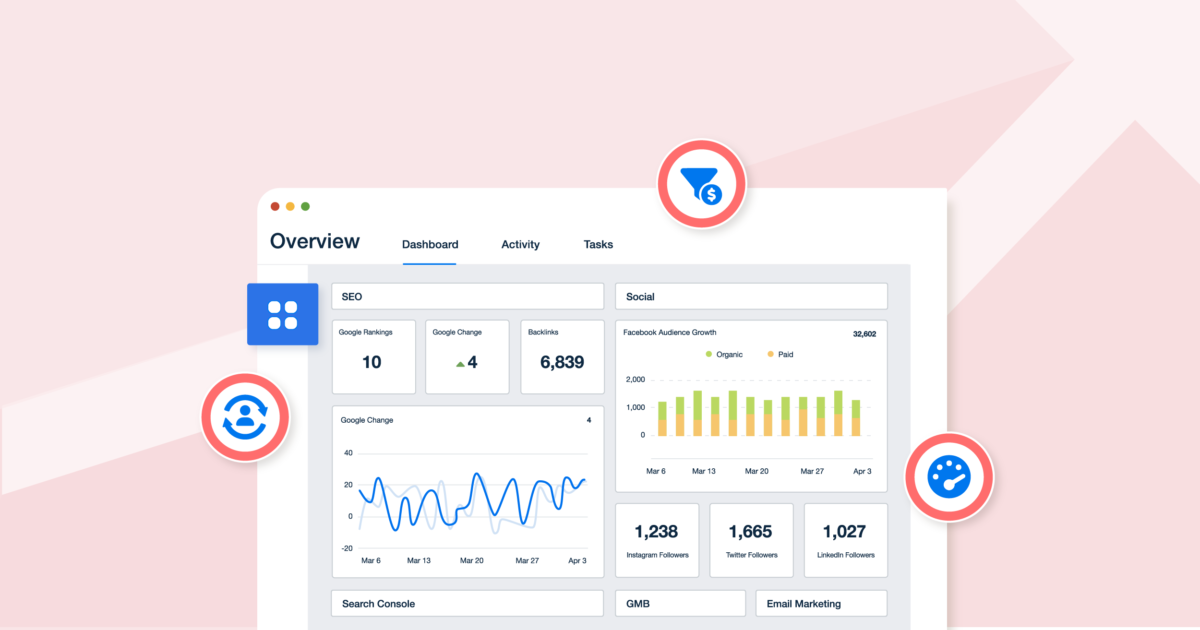
When Dashboards Lie: Measurement Mistakes That Steer You Off a Cliff
A surprising number of “failed” campaigns weren’t truly failing—they were just being measured badly. If attribution is messy, tracking is incomplete, or success is defined as “more leads” instead of “more qualified conversations,” teams end up optimizing for the wrong thing. And once you’re chasing the wrong metric, it’s like driving with a foggy windshield: you’ll still move fast… just not in the right direction.
Here’s what typically goes wrong in Asia-focused B2B campaigns:
- Over-crediting last-click channels (often search or brand retargeting) while under-valuing awareness and consideration touches.
- Counting MQLs as wins even when they never convert to meetings or sales-accepted leads.
- Missing offline conversion signals (events, partner referrals, WhatsApp/WeChat conversations) that don’t neatly show up in ad platforms.
- UTM chaos—inconsistent tagging makes channel performance look random.
- No market-level reporting—you can’t fix Japan-specific issues if Japan isn’t segmented in reporting.
The lesson: build a measurement system that reflects how B2B buying actually happens. That usually means defining a “lead quality ladder” (e.g., inquiry → qualified → meeting → proposal → closed-won), then tracking conversion rates between steps by market and channel. It’s also smart to use consistent UTMs, enforce naming conventions, and align marketing + sales on what counts as a qualified lead.
If you’re serious about B2B Lead Generation for Asia, measurement can’t be an afterthought. Treat it like infrastructure. Once your data is clean, your optimizations get sharper, your budget gets safer, and “failure” turns into a clear list of fixable levers.
Garbage In, Garbage Out: Data, Compliance, and List Quality That Quietly Ruin Results
Sometimes the campaign creative is solid, the targeting is reasonable, and the landing page converts—yet the pipeline still looks sad. One sneaky culprit is list quality and compliance blind spots. In Asia, data rules and expectations vary by country, and buyers are increasingly sensitive to how their information is collected and used. If your campaign feels even slightly spammy—or if outreach is based on questionable data—trust drops, response rates tank, and you may invite regulatory headaches.
Common failure patterns include:
- Over-reliance on purchased lists with outdated titles, wrong company sizes, and recycled emails.
- Weak consent practices (especially for email nurturing) that aren’t aligned to local regulations or platform rules.
- Form fields that invite junk (no validation, no friction, no bot protection).
- Misaligned targeting data—for example, optimizing to cheap clicks that correlate with low intent.
- No hygiene cadence—duplicates, dead domains, and role-based emails drag deliverability down.
The fix is a mix of hygiene and respect-for-the-buyer. Use verification where appropriate, add bot protection, and structure forms to balance conversion with quality (e.g., role + company + business email). Build lead scoring that reflects intent signals (pricing page visits, webinar attendance, repeat sessions), not just demographics. And when you’re operating across markets, make compliance part of your workflow—not a panic button later. Official references like Singapore’s PDPC (https://www.pdpc.gov.sg/) and Japan’s PPC (https://www.ppc.go.jp/en/) are good starting points for understanding the spirit of local expectations.
Bottom line: strong data practices don’t just reduce risk—they improve performance. Clean inputs create cleaner handoffs, better personalization, and far fewer “ghost leads” that waste everyone’s time.


