
B2B buying across Asia is getting sharper, faster, and a whole lot more self-serve. Today’s buyers don’t want a long back-and-forth just to understand what you do. They’ll research quietly, compare options, ask peers, and build a shortlist—often before your sales team even knows they exist. And here’s the kicker: this isn’t just “more online activity.” It’s a different buying rhythm.
You’re dealing with larger buying committees, more stakeholder alignment, and a rising expectation that vendors show up with clarity right away. That means your website, messaging, case studies, and positioning aren’t just marketing assets anymore—they’re your front-line sales reps. If your value proposition is fuzzy, your pricing is mysterious, or your proof points are thin, you’ll lose deals without ever hearing “no.”
This is exactly why B2B Lead Generation for Asia is shifting toward strategies that blend demand creation (getting on the radar early) with demand capture (winning the shortlist when intent spikes). It’s not about blasting more messages—it’s about being discoverable, credible, and easy to evaluate.
Practical takeaway: map your buyer’s research journey. What do they read first? What questions do they ask internally? What objections come up in procurement? Then build content and landing pages that answer those questions plainly, with proof. In Asia’s B2B market, the vendor who reduces uncertainty the fastest tends to win the meeting—and the deal.

Trust Is the Real Currency: Proof Beats Promises Every Time
In many Asian markets, trust isn’t a “nice-to-have”—it’s the price of entry. Buyers are cautious, stakeholder-driven, and often risk-averse, especially when switching vendors has operational or reputational downside. So if your lead generation relies mainly on big claims (“best-in-class,” “leading provider,” “game-changing”) without hard proof, you’ll feel the drag: lower conversion rates, more ghosting, longer sales cycles.
What counts as trust-building proof today? Think tangible, specific, and local. Decision-makers want evidence that you’ve solved similar problems for similar businesses, ideally in their region or industry. The more complex the offering (SaaS, IT services, logistics, manufacturing solutions), the more buyers want to see the “how,” not just the “wow.”
High-performing trust signals include:
- Case studies with measurable outcomes and clear scope
- Customer logos and references that are relevant (not random)
- Certifications, compliance readiness, and security posture clarity
- Local presence indicators: regional partners, local support, local language assets
- Thought leadership that teaches rather than sells
Also, don’t underestimate “presence trust.” If your LinkedIn looks inactive, your website feels generic, and your content is dated, buyers hesitate. On the flip side, consistent publishing, visible leadership, and clear point-of-view content can make you feel like the safer choice—even if you’re not the biggest name.
Bottom line: in Asia’s B2B landscape, trust isn’t built with louder marketing. It’s built with sharper proof.
Move From Lead Volume to Lead Quality: Intent Signals Are Your Best Friend
A big change happening right now: teams are getting tired of “leads” that don’t convert. And honestly, who can blame them? When marketing celebrates form fills but sales sees low-fit prospects, everyone loses—time, budget, and patience. The smarter play in Asia is shifting toward intent-led lead generation: identifying and prioritizing prospects who are already showing buying signals.
Intent can show up in a bunch of ways—high-value page visits (pricing, comparison, integration pages), repeat visits from the same company, webinar attendance, product demo engagement, or even consistent interaction with niche content (like implementation guides or industry-specific playbooks). Instead of treating every lead the same, intent-led systems score behavior and route the right prospects into the right follow-ups.
This is where B2B Lead Generation for Asia gets more strategic: it’s not just “get more leads,” it’s “get the right leads and move them forward faster.” The best-performing funnels often combine:
- Bottom-of-funnel pages optimized for conversion (demo, consultation, pricing requests)
- Retargeting that educates instead of nags
- Email/LinkedIn nurture sequences that address common objections
- Sales enablement assets built for committees (ROI sheets, security checklists, rollout plans)
And don’t forget a simple truth: if you can’t explain the value in one sentence, the buyer won’t stick around long enough for sentence two. Tight positioning + intent tracking is a powerful combo.
Localization That Converts: Go Beyond Translation or Get Ignored
“Localization” in Asia can’t just mean swapping English for another language and calling it a day. Different markets have different buying triggers, communication styles, and proof expectations. Even within Southeast Asia, what resonates in Singapore may land differently in Indonesia, Vietnam, or Thailand. The same goes for India, Japan, and South Korea—each market has its own business culture and decision cadence.
Real localization means tailoring your message to how buyers think, not just how they speak. For example:
- Some markets prefer direct ROI and operational efficiency messaging
- Others respond better to reliability, risk reduction, and long-term support
- Certain industries prioritize compliance, data residency, or vendor stability
- Procurement processes may require specific documentation up front
A practical way to nail localization: build “market-specific conversion paths.” Instead of one global landing page, create regional versions with local testimonials (or region-relevant proof), locally appropriate use cases, and clearer expectations around onboarding and support. If your offer requires consultation, make scheduling frictionless across time zones and channels buyers actually use.
Also, watch your tone. Overly aggressive sales language can backfire. On the flip side, content that feels too vague or overly polished can seem untrustworthy. The sweet spot is professional, clear, and human—like you actually understand the buyer’s day-to-day reality.
In short: localization isn’t a cosmetic upgrade. It’s a conversion multiplier.
The Channels That Matter Now: Partnerships, Communities, and Platform Ecosystems
Asia’s B2B growth isn’t happening in a vacuum—it’s happening through ecosystems. Buyers discover vendors through partner recommendations, industry communities, marketplaces, trade events, and professional networks. If your lead generation strategy only focuses on one channel (say, outbound or paid ads), you’re leaving opportunities on the table.
Partnerships are especially powerful in Asia because they compress trust-building time. A referral from a known systems integrator, distributor, association, or complementary vendor can move you from “unknown” to “credible” instantly. The same goes for speaking slots, co-hosted webinars, and joint reports—anything that borrows authority and delivers value.
Meanwhile, community-led discovery is rising. Buyers follow practitioners, join industry groups, and learn through peer conversations. That’s why content that teaches—implementation tips, checklists, benchmarks, “mistakes to avoid”—often outperforms content that just promotes. It’s not magic; it’s relevance.
To adapt your channel strategy, consider a mix like:
- Demand capture: high-intent SEO pages, comparison pages, solution pages
- Demand creation: LinkedIn thought leadership, webinars, roundtables, newsletters
- Partner-led growth: referral agreements, co-marketing, channel enablement
- Event-led pipelines: targeted trade shows, small executive breakfasts, workshops
When you connect these channels into one coherent system, B2B Lead Generation for Asia stops being a spray-and-pray effort and becomes a predictable engine: attract the right audience, earn trust, capture intent, and convert with confidence.
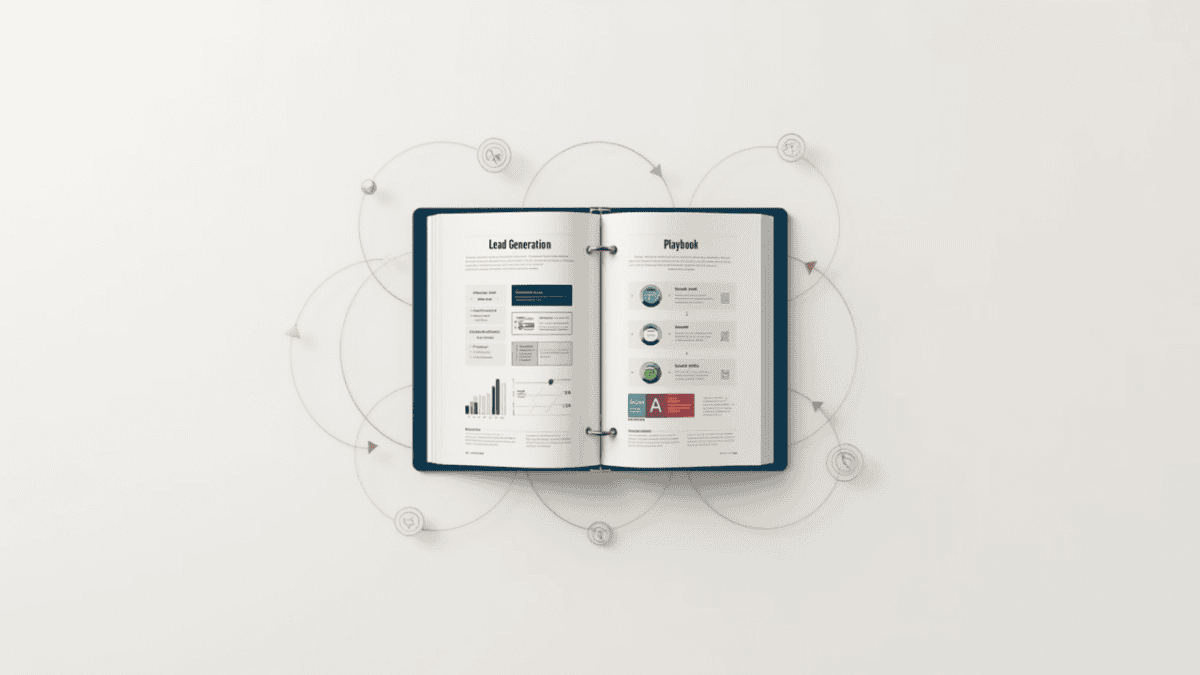
Turn Lead Gen Into a System: A Practical Playbook Teams Can Actually Execute
The biggest gap in most B2B teams isn’t effort—it’s structure. Campaigns come and go, messaging changes every month, and sales follows up when they can. In a fast-moving region like Asia, that kind of randomness gets expensive. What works better is a repeatable system: clear audience targeting, consistent messaging, reliable handoffs, and content that supports the entire buying journey—not just the first click.
A practical execution playbook usually has five moving parts:
First, define your Ideal Customer Profile (ICP) by market. “Mid-market manufacturers in SEA” is still too broad. Tighten it with specifics: sub-industry, headcount, tech stack, buying triggers, and common pains. The tighter the ICP, the easier it is to write messages that feel like they were made for the buyer.
Second, build an “intent capture” foundation. That means pages and assets designed for people who are already shopping: solution pages, industry pages, comparison pages, and strong proof (case studies, outcomes, implementation steps). This is where B2B Lead Generation for Asia becomes less about chasing and more about being found at the right moment.
Third, set up a nurture engine. Not everyone is ready today, but many will be ready in 30–90 days. A simple sequence—use-case emails, objection-handling content, and short “why this works” examples—keeps you in the conversation without sounding needy.
Fourth, align sales follow-up with buyer behavior. A demo request is not the same as a webinar attendee. Route leads based on intent levels, personalize the first touch, and use a clear next step.
Finally, run monthly optimization loops. Review what’s converting by market, refine messaging, and double down on the best-performing channels. Lead gen scales when it’s treated like an operating system, not a one-off campaign.
Measure What Matters: The KPIs That Actually Predict Revenue in Asia
If Asia’s B2B landscape is changing, your metrics can’t stay stuck in vanity mode. “More traffic” and “more leads” look nice in a report, but they don’t always predict revenue—especially when buying cycles vary wildly across markets and industries. The goal isn’t just to generate interest; it’s to generate pipeline you can trust.
Start with the KPI that clears the fog fastest: qualified pipeline. Track how many opportunities are created from marketing and outbound efforts, and how quickly they move. When teams focus on pipeline quality, they naturally improve targeting, messaging, and follow-up.
Here are the KPIs that tend to matter most for modern B2B Lead Generation for Asia:
- ICP match rate: What percentage of inbound/outbound leads fit your target profile?
- Lead-to-meeting rate (by channel and market): Where are conversations actually starting?
- Meeting-to-opportunity rate: Are you attracting decision-ready buyers or curious browsers?
- Sales cycle length by market: Singapore may move differently than India; Japan may require more consensus.
- Opportunity win rate and deal velocity: A small lift here often beats doubling lead volume.
- Cost per qualified opportunity (CPQO): This is often more useful than cost per lead.
- Multi-touch influence: Which content and channels show up repeatedly in won deals?
Also, measure trust signals: case study views, repeat visits from target accounts, and engagement with bottom-of-funnel pages. Those behaviors often predict readiness better than a form fill.
When your metrics reflect how buyers actually buy, performance becomes easier to improve. You stop guessing, start prioritizing, and build a lead generation engine that holds up across Asia’s different markets—no matter how quickly the landscape shifts.


