Why AI Has Become the Operating System for Singapore Marketing Agencies
Singapore’s digital marketing environment is built on pressure. Clients expect measurable growth, not creative guesswork. Budgets are controlled, timelines are compressed, and performance is reviewed continuously. In this reality, agencies that rely on instinct alone are systematically outperformed.
This is where AI Marketing has evolved from a supporting tool into a core operating system. Leading agencies now use AI Marketing to power strategic planning, execution, and optimization across every stage of the marketing funnel.
AI enables agencies to process vast datasets across paid media, organic channels, customer interactions, and conversion paths in near real time. Instead of waiting for post-campaign reports, teams can predict outcomes, adjust direction mid-campaign, and defend decisions with data-backed clarity.
Singapore’s role as a regional hub adds another layer of urgency. Campaigns often span multiple markets with different behaviors and expectations. AI Marketing allows agencies to scale intelligently—maintaining performance consistency while adapting messaging and targeting efficiently.
The agencies leading the market understand one thing clearly: AI Marketing is not a shortcut to results. It is a force multiplier. When paired with experienced strategists, it becomes a durable competitive advantage that compounds over time.
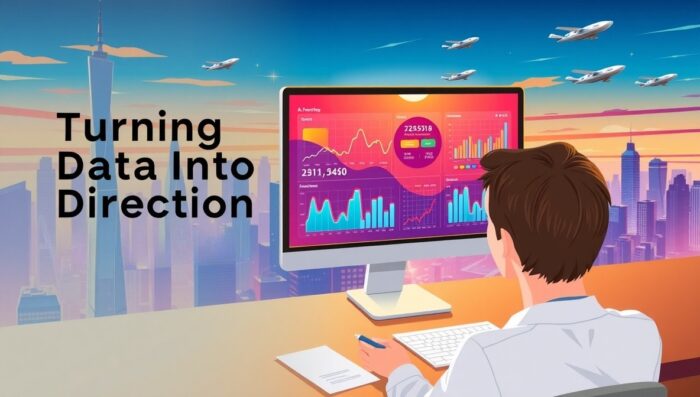
Turning Data Into Direction: How AI Analytics Drive Smarter Decisions
Modern marketing generates enormous volumes of data, but data alone does not create advantage. Insight does.
AI-powered analytics allow agencies to move beyond surface-level metrics and uncover patterns in behavior, intent, and conversion readiness. Instead of static dashboards, AI models continuously learn from user activity, highlighting opportunities and risks as they emerge.
This is where AI Marketing delivers practical impact. Agencies can forecast demand, identify friction points in the customer journey, and allocate resources based on probability rather than assumption. Campaign planning becomes predictive, not reactive.
AI also shortens feedback loops dramatically. Insights that once took weeks to surface are now available within hours. This speed enables rapid testing, faster optimization, and earlier scaling of what works.
In Singapore’s results-driven market, analytics is no longer about reporting what happened. It is about anticipating what will happen next. AI Marketing provides that foresight—consistently and without bias.

Scaling Content Without Diluting Quality
Content production has become one of the biggest operational bottlenecks for agencies. Demand for personalized, multi-format content continues to grow, while human capacity remains finite.
AI solves this imbalance by accelerating ideation, drafting, and optimization while preserving strategic oversight. Agencies use AI Marketing to generate variations, refine messaging, and adapt content across platforms and markets efficiently.
This capability is especially valuable in Singapore’s multi-market environment, where campaigns often require localization without sacrificing consistency. AI supports this process by maintaining structure while adapting nuance.
The strongest agencies use AI as a productivity engine, not a creative replacement. Human teams still define voice, story, and strategy. AI Marketing removes friction, allowing teams to focus on high-value creative decisions.

Precision Over Guesswork in Paid Advertising
Paid advertising in Singapore leaves little room for error. Costs are high, and inefficiency compounds quickly.
AI-driven advertising systems allow agencies to optimize targeting, bidding, and creative delivery in real time. Campaigns evolve dynamically based on performance signals rather than delayed reporting. AI Marketing directly improves ROI by reallocating budgets instantly and scaling successful ad combinations without delay.
For regional campaigns, AI is essential. User behavior varies widely across markets, devices, and moments. AI Marketing adapts faster than any manual process ever could.
In a market that punishes waste, AI-driven advertising is no longer optional—it is operational hygiene.

Always-On Engagement Through AI Automation
Customer expectations have shifted toward immediacy. Delayed responses cost opportunities.
AI-powered automation enables agencies to deliver real-time engagement across websites, messaging channels, and email. Leads are qualified instantly, and follow-ups occur at peak intent rather than after momentum fades. AI Marketing ensures engagement systems operate continuously, without inconsistency, learning from every interaction to improve future performance.
For agencies managing high lead volumes, automation is not about convenience. It is about reliability, scalability, and control.
Search Visibility and Performance Clarity Powered by AI
Search and social platforms evolve continuously, making manual optimization increasingly inefficient.
AI-driven systems allow agencies to identify ranking opportunities, understand search intent, and refine content strategies based on behavioral signals rather than assumptions. Social insight powered by AI reveals sentiment shifts and emerging trends early.
With AI Marketing, performance reporting becomes clearer and more actionable. Clean dashboards replace bloated reports, allowing faster decision-making and stronger client confidence.
Conclusion: AI Is the New Baseline for Agency Competitiveness
The market has already decided.
Agencies that treat AI as optional will struggle to scale, justify fees, and retain talent. Those that embed AI Marketing into their operations gain speed, precision, and resilience.
AI does not replace experience. It amplifies it. And in Singapore’s high-stakes marketing environment, amplification is survival.