Introduction: The Shift Is Over—Marketing Has Entered Its AI Era
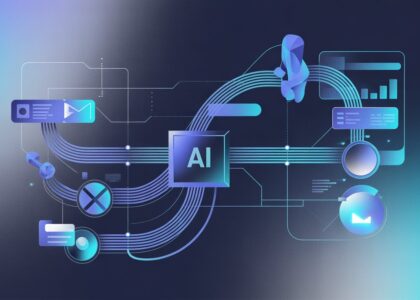
Marketing doesn’t change politely. It shifts when pressure builds, tools mature, and old methods stop delivering returns. That moment has arrived. Artificial intelligence is no longer an experimental layer added to marketing—it has become the engine driving decisions, performance, and scale. At the center of this evolution sits AI Marketing, transforming how brands compete in real time.
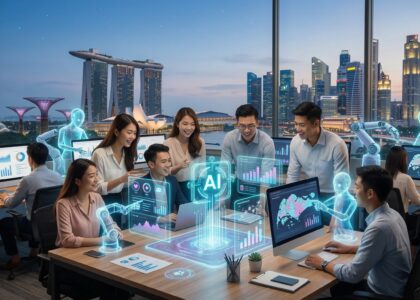
Singapore stands out because it doesn’t romanticize innovation. It operationalizes it. Businesses here demand clarity, efficiency, and measurable outcomes. That mindset has made the city a proving ground for AI-powered marketing models that don’t just look impressive in presentations but perform under commercial pressure.
What makes this moment different from past digital shifts is depth. AI is influencing strategy, media buying, creative optimization, customer journey design, and forecasting—simultaneously. This convergence allows agencies to see what works, why it works, and how to scale it faster than ever before. When aligned correctly, AI Marketing removes guesswork and replaces it with informed action.
This article takes you inside that reality. Not the hype. Not the buzzwords. The actual mechanics of how Singapore-based AI marketing agencies operate, where they deliver value, and why this model is shaping the future of marketing across Asia and beyond.
Why Singapore Became a Launchpad for AI-Driven Marketing
Singapore didn’t wait for global trends to arrive—it built the infrastructure to attract them. Strong digital governance, data protection frameworks, and an advanced business ecosystem created fertile ground for AI-led marketing to grow responsibly and fast. Agencies here benefit from high-quality data access, regional market exposure, and clients who value long-term performance over short-term noise.
What sets Singapore agencies apart is intent. Many were designed around AI Marketing from the ground up, rather than retrofitting automation into outdated agency models. This allows AI to shape strategy early, not just optimize execution after the fact.
The regional advantage also matters. Southeast Asia is fragmented—languages, platforms, behaviors, and purchasing power vary widely. AI enables agencies to manage this complexity without sacrificing personalization. Campaign intelligence scales without linear increases in cost or headcount.
Just as important is trust. Singapore’s regulatory clarity forces discipline. Agencies must document data use, ensure transparency, and apply ethical controls. This structure reduces risk for brands and creates a stable environment where AI Marketing can mature instead of burning out as a trend.
The result is an ecosystem where innovation isn’t fragile—it’s sustainable.
The Technology Backbone That Makes AI Marketing Actually Work
Behind every effective AI-driven campaign is a disciplined technology stack. It starts with data integrity. Clean pipelines, consent-based data collection, and unified customer views ensure that insights are reliable before automation begins. Without this foundation, AI simply accelerates mistakes.
Machine learning models then analyze behavior, predict outcomes, and continuously refine targeting. Natural language processing interprets search intent, content engagement, and sentiment signals. These systems don’t operate in isolation—they feed into one another, creating a learning loop that improves with every interaction.
Generative tools accelerate production, but they don’t define strategy. In mature agencies, AI supports human teams by producing options, variations, and simulations. Humans decide what aligns with brand identity and business objectives. That balance is what gives AI Marketing its edge.
Real-time optimization is another critical layer. Media bids adjust dynamically. Creative assets rotate based on performance signals. Messaging evolves as customer behavior changes. This is marketing that responds while the opportunity still exists—not after budgets are spent.
Technology alone doesn’t create advantage. Orchestration does. Agencies that understand how to connect tools into a cohesive system are the ones delivering consistent, defensible results.
Inside the Agency: Where Strategy Meets Machine Intelligence
Walk into a Singapore AI marketing agency and you’ll notice something immediately—decisions are data-led, but not data-blind. Strategy teams start with insight, not instinct. AI surfaces patterns, but humans determine priorities.
Campaign planning begins with analysis: audience clusters, historical performance, competitive signals, and predictive scenarios. From there, strategists define objectives and guardrails. AI executes within those boundaries, optimizing relentlessly while teams monitor outcomes.
This is where AI Marketing proves its real value. It frees human teams from manual execution and redirects their energy toward higher-order thinking—brand positioning, narrative clarity, and growth planning.
Accountability remains human. Models are reviewed. Bias is checked. Outputs are validated. AI does the heavy lifting, but responsibility never disappears. That discipline is critical in markets where trust is currency.
The agencies succeeding today are not replacing people with machines. They are building partnerships between the two—and the results show it.
The Business Impact Brands Actually Care About
Brands don’t invest in AI for novelty. They invest because performance improves. AI Marketing delivers tighter targeting, better conversion rates, and more efficient budget allocation. Waste is identified faster. Opportunities are seized earlier.
Personalization becomes practical at scale. Messaging adapts to behavior, timing, and intent. Customers feel understood instead of interrupted. That relevance drives engagement and loyalty, which directly impacts revenue.
Forecasting also improves. Agencies can model outcomes before committing spend, giving leadership teams clarity and confidence. Marketing becomes predictable, not speculative.
Scalability is the final advantage. AI doesn’t fatigue. It manages complexity without inflating costs. For brands expanding regionally, this capability isn’t optional—it’s strategic.
When brands see consistent gains across performance, speed, and insight, adoption becomes a business decision, not a marketing experiment.
The Risks No One Should Ignore
AI is powerful, but careless use erodes value fast. Poor data creates poor outcomes. Over-automation flattens brand voice. Blind trust in algorithms invites reputational risk.
Singapore agencies that endure confront these issues head-on. They implement governance frameworks, ethical reviews, and human oversight. AI outputs are questioned, not worshipped.
Creative integrity is protected by design. AI assists ideation but doesn’t replace brand judgment. This ensures differentiation remains intact—a critical factor as automation becomes widespread.
The truth is simple: AI Marketing amplifies intent. If strategy is weak, AI will expose it faster. If strategy is strong, AI will scale it further.
Conclusion: The Future Belongs to AI-Literate Brands
The future of marketing isn’t about choosing between human creativity and machine intelligence. It’s about integrating them intelligently. Singapore’s AI marketing ecosystem shows what that integration looks like when done with discipline, clarity, and purpose.
Brands that embrace AI Marketing today are not chasing trends. They are building systems that learn, adapt, and outperform over time. They move faster, waste less, and understand their customers better.
The gap between AI-literate brands and everyone else is widening. Those who delay will spend more just to keep up. Those who act now will define the standard others follow.
This isn’t the future of marketing anymore. It’s the operating reality. And Singapore is already proving what works.