

The Reality of Singapore’s Marketing Landscape Has Already Shifted
Singapore has always been a market defined by speed, precision, and innovation. Businesses operate in a highly competitive environment where digital adoption happens faster than in most global markets. Over the past decade, marketing strategies have steadily moved away from traditional campaigns toward data-driven digital engagement.
Today, another transformation is unfolding—and it’s being powered by artificial intelligence.
Modern consumers in Singapore are extremely connected. They research products online, compare options instantly, and expect brands to respond with relevant information almost immediately. In such an environment, generic marketing campaigns struggle to gain traction. Audiences want experiences tailored to their needs, behaviors, and preferences.
This is exactly where AI Marketing becomes critical.
Instead of relying on guesswork or manually optimized campaigns, AI-powered marketing uses data analysis and machine learning to understand how customers behave. These systems process enormous amounts of data—far more than human teams can realistically manage—and convert that information into actionable insights.
Businesses using AI Marketing can identify patterns in customer behavior, predict purchasing intent, and personalize messaging across digital channels. This creates marketing strategies that evolve dynamically rather than remaining static.
In Singapore’s digital-first economy, this capability is becoming essential. Companies that adopt AI-powered marketing strategies gain a clearer understanding of their audiences and can respond faster to changing market conditions.
Meanwhile, organizations that continue relying solely on traditional marketing workflows risk losing relevance in a market that increasingly values speed, personalization, and data-driven decisions.
The shift has already begun—and it’s accelerating.

Singapore’s Digital Economy Demands Smarter Marketing
Singapore’s digital infrastructure is among the most advanced in the world. Internet penetration is exceptionally high, smartphone usage is widespread, and consumers are accustomed to seamless online experiences.
This environment fundamentally changes how marketing works.
Customers interact with brands across multiple digital touchpoints every day—search engines, social media, websites, mobile apps, and messaging platforms. Each interaction generates valuable data about customer interests and behavior. Businesses that can analyze this information effectively gain a powerful advantage.
Traditional marketing approaches struggle in this environment because they rely heavily on manual analysis and generalized audience segments. Marketing teams might review reports weekly or monthly, adjusting campaigns based on past performance.
However, consumer behavior evolves much faster than those cycles allow.
With AI Marketing, data analysis happens continuously. Artificial intelligence systems monitor customer interactions in real time, identifying patterns and adjusting marketing strategies accordingly.
For example, AI can analyze browsing behavior, engagement signals, and past purchases to determine which customers are most likely to convert. Marketing messages can then be tailored specifically to those high-intent users.
Companies leveraging AI Marketing also gain the ability to optimize advertising budgets more effectively. Instead of distributing marketing spend evenly across campaigns, AI systems identify the channels and audiences generating the strongest results.
In Singapore’s highly competitive market, this level of efficiency can significantly improve marketing performance. Businesses that integrate artificial intelligence into their strategies can respond to market signals faster and deliver more relevant customer experiences.
In a digital economy driven by speed and personalization, smarter marketing is no longer optional.

Understanding What AI Marketing Actually Means
Artificial intelligence is often discussed in broad terms, which can make the concept seem abstract or overly technical. In reality, AI marketing focuses on practical applications that help businesses make better marketing decisions.
At its core, AI Marketing involves using machine learning algorithms and data analytics to improve how marketing campaigns are designed, executed, and optimized.
Traditional marketing often relies on assumptions about customer behavior. AI-driven marketing replaces those assumptions with real-time insights derived from actual user interactions.
Artificial intelligence systems analyze large datasets that include:
- website behavior
- email engagement
- social media interactions
- purchase history
- demographic signals
By identifying patterns across these datasets, AI tools can predict how customers are likely to respond to different marketing messages.
Companies using AI Marketing frequently deploy technologies such as automated customer segmentation, predictive analytics, and personalization engines. These tools allow businesses to deliver highly relevant messages to specific audiences.
Another important capability is automation. AI can handle repetitive marketing tasks—such as adjusting advertising bids or segmenting customer lists—freeing marketing teams to focus on strategic planning and creative work.
The result is a marketing ecosystem that learns continuously. Campaign performance improves over time as algorithms gather more data and refine their recommendations.
For businesses operating in Singapore’s dynamic digital environment, this adaptability is invaluable. AI-driven systems allow companies to stay aligned with customer preferences while scaling their marketing efforts efficiently.
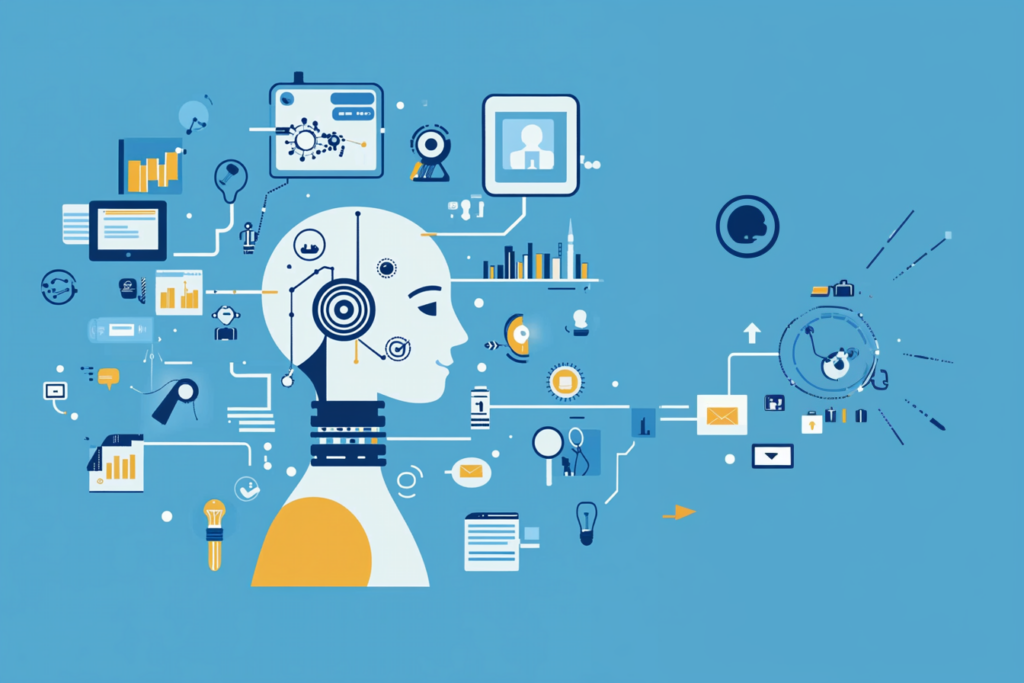
The Performance Advantage of AI-Driven Campaigns
One of the most powerful advantages of AI-driven marketing is its ability to optimize campaigns continuously. Traditional marketing workflows typically rely on scheduled reviews, where teams analyze results after campaigns have already been running for some time.
Artificial intelligence removes this delay.
With AI Marketing, marketing systems can evaluate performance in real time. Algorithms analyze engagement metrics, customer responses, and conversion data as campaigns unfold.
When patterns emerge, the system automatically adjusts strategies to improve results.
For instance, AI can shift advertising budgets toward higher-performing audiences or modify messaging based on engagement trends. Instead of waiting for a campaign to finish before making adjustments, improvements happen continuously.
Businesses implementing AI Marketing often experience higher efficiency because resources are allocated more intelligently. Campaigns that perform well receive additional investment, while underperforming initiatives are refined or paused.
Predictive analytics also provides a major advantage. AI systems can analyze historical data to anticipate future customer behavior. This allows companies to design campaigns that align with emerging trends before competitors recognize them.
The result is marketing that operates proactively rather than reactively.
In a market like Singapore—where consumer expectations evolve quickly—this agility can significantly strengthen a company’s competitive position.
Industries in Singapore Already Leveraging AI Marketing
Artificial intelligence is already reshaping how multiple industries in Singapore approach marketing. Companies that operate in highly competitive sectors are among the earliest adopters of AI-driven strategies.
E-commerce businesses, for example, rely heavily on data-driven personalization. Online retailers analyze customer browsing patterns and purchasing histories to recommend products tailored to individual preferences.
Financial services organizations are also adopting AI Marketing strategies to strengthen digital engagement. AI-powered systems help financial institutions understand customer behavior, allowing them to offer personalized services and targeted communications.
Travel and hospitality companies are exploring similar technologies. By analyzing booking patterns and traveler preferences, businesses can design marketing campaigns that anticipate demand and deliver relevant promotions.
B2B companies are increasingly integrating AI Marketing into lead generation strategies as well. AI tools analyze engagement signals across websites, email campaigns, and digital advertising to identify prospects who are most likely to convert.
Across these industries, one pattern is clear: organizations using AI-driven marketing tools gain deeper insights into customer behavior and improve their ability to deliver meaningful digital experiences.
As adoption expands, AI marketing is becoming a foundational capability rather than a niche technology.

The Implementation Challenges Businesses Must Overcome
While the advantages of AI-driven marketing are compelling, implementing these technologies successfully requires careful planning.
One of the most common obstacles businesses encounter is data organization. Artificial intelligence relies on structured, high-quality data to generate reliable insights. If customer information is scattered across multiple systems or contains inaccuracies, AI tools may struggle to produce meaningful results.
Companies adopting AI Marketing often need to strengthen their data infrastructure before AI platforms can operate effectively.
Another challenge involves integrating AI tools into existing marketing systems. Businesses typically rely on multiple platforms for advertising, analytics, and customer relationship management. Ensuring these systems communicate effectively with AI technologies can require technical expertise.
There is also a learning curve for marketing teams. AI-driven systems introduce new workflows that require marketers to interpret algorithmic insights and adjust strategies accordingly.
Organizations that approach AI Marketing strategically often begin with focused pilot projects. These initiatives allow teams to test AI tools, evaluate performance improvements, and gradually expand adoption across the marketing ecosystem.
Over time, businesses develop a stronger understanding of how AI can enhance both operational efficiency and customer engagement.
Conclusion: The Future of Marketing in Singapore Is Being Defined Now
Singapore’s marketing environment continues to evolve at a remarkable pace. Digital transformation has changed how consumers interact with brands, making personalization and relevance more important than ever.
Artificial intelligence is emerging as the technology that enables businesses to meet these expectations effectively.
Companies that adopt AI Marketing gain powerful capabilities. They can analyze customer data more deeply, design highly targeted campaigns, and optimize marketing performance with unprecedented precision.
These advantages translate into stronger customer relationships and more efficient marketing operations.
Businesses that delay adopting AI-driven strategies may find it increasingly difficult to compete in a market where customer expectations continue to rise.
The companies that thrive in Singapore’s digital economy will be those that embrace innovation, invest in intelligent technologies, and continuously refine their marketing strategies.
Artificial intelligence is no longer an experimental tool for the future.
It is already shaping the future of marketing today.


