
B2B buying across Asia has quietly flipped. Decision-makers aren’t waiting for a sales call to learn the basics anymore—they’re researching on their own, checking peer opinions, comparing alternatives, and only then reaching out. In plain terms: if your brand isn’t showing up early in the buyer’s journey, you’re already playing catch-up.
That’s why the future of B2B Lead Generation for Asia isn’t just about “getting leads.” It’s about building visibility and trust before someone ever fills out a form. More buying committees are involved (finance, IT, operations, security), and they don’t all care about the same thing. Your messaging has to speak to outcomes, risks, and proof—not just features.
What’s changing the game is the rise of “micro-moments” in B2B: a prospect watches a 60-second product clip, skims a case study, then shares it internally. If that content doesn’t answer the real question (“Will this work for us?”), they’ll move on. Fast.
Practical moves you’ll see winning teams adopt:
- Create country- and industry-specific proof points (local case studies beat global claims).
- Build comparison-friendly assets (implementation timelines, security checklists, ROI calculators).
- Turn one core insight into multiple formats: short video, carousel, webinar snippet, and a one-page PDF.
- Put credibility front-and-center: certifications, customer logos (where permitted), and measurable outcomes.
If you want one north star: make it easier for buyers to say “yes” internally. In Asia’s diverse markets, trust is currency—and content is how you earn it.

Intent Data and AI Personalization: Smarter Targeting Without Guesswork
Spray-and-pray outreach is fading, and honestly, good riddance. Across Asia, the better play is using intent signals—what accounts are researching, what topics they’re engaging with, and what pages they revisit—to prioritize outreach that feels timely rather than pushy.
AI is increasingly powering this shift, but not in the “magic button” way people hype up. The real value is in pattern recognition: spotting which behaviors correlate with pipeline, then tailoring messaging accordingly. For example, an account visiting your pricing page twice in a week and attending a webinar is signaling urgency. Another account reading integration docs may be evaluating technical fit. These are totally different conversations, and the next best action shouldn’t be the same canned email.
A few trends you’ll see more of:
- First-party data getting serious: stronger tracking of website engagement, content downloads, and event participation—because third-party cookies and easy tracking options are shrinking.
- Dynamic content experiences: landing pages that adapt by industry, role, or funnel stage.
- AI-assisted personalization at scale: not just “Hi {FirstName},” but value props aligned to industry pain points, with human review to keep it from sounding robotic.
To do this well, teams will tighten the loop between marketing and sales. Marketing identifies and scores intent; sales responds with context-driven outreach. And yes, quality beats quantity—especially when your TAM is niche.
Useful references worth bookmarking:
- LinkedIn’s guidance on B2B marketing and targeting: https://business.linkedin.com/marketing-solutions
- Google’s updates on privacy and advertising changes: https://privacysandbox.com/
The takeaway: the future isn’t more outreach—it’s better timing, better relevance, and fewer wasted touches.
ABM in Asia Goes Mainstream: Fewer Accounts, Deeper Wins
Account-Based Marketing (ABM) is no longer a “nice-to-have” for enterprise companies. In Asia’s competitive B2B environment—where deals often involve multiple stakeholders and longer evaluation cycles—ABM is becoming the practical approach for teams that want predictable pipeline, not random spikes.
Here’s the big shift: instead of chasing hundreds of lukewarm leads, high-performing teams will focus on a smaller set of high-fit accounts and run coordinated plays across channels. That means marketing and sales align on a list of priority accounts, agree on what “engaged” looks like, and then build campaigns designed to create internal momentum inside those companies.
What makes ABM particularly powerful in Asia is market diversity. One-size-fits-all messaging falls flat across regions. ABM lets you tailor by vertical, country, and even sub-industry cluster—without needing to reinvent your entire strategy every month.
Winning ABM trends to watch:
- “ABM-lite” for mid-market: simple account lists + role-based messaging + tight follow-up windows.
- Regional playbooks: Southeast Asia vs. Japan vs. India can have different buying rhythms and content preferences.
- Stakeholder mapping becoming standard: not just the decision-maker, but influencers, blockers, and end-users.
- Sales enablement content designed for forwarding: one-pagers, short decks, business cases, and security summaries.
A practical example: if you’re targeting logistics firms, you might run a campaign around reduced delivery delays and system visibility, while for fintech you lean into compliance, uptime, and risk controls. Same product, different “why.”
ABM isn’t about being fancy. It’s about being focused—and in Asia’s fragmented B2B landscape, focus wins.
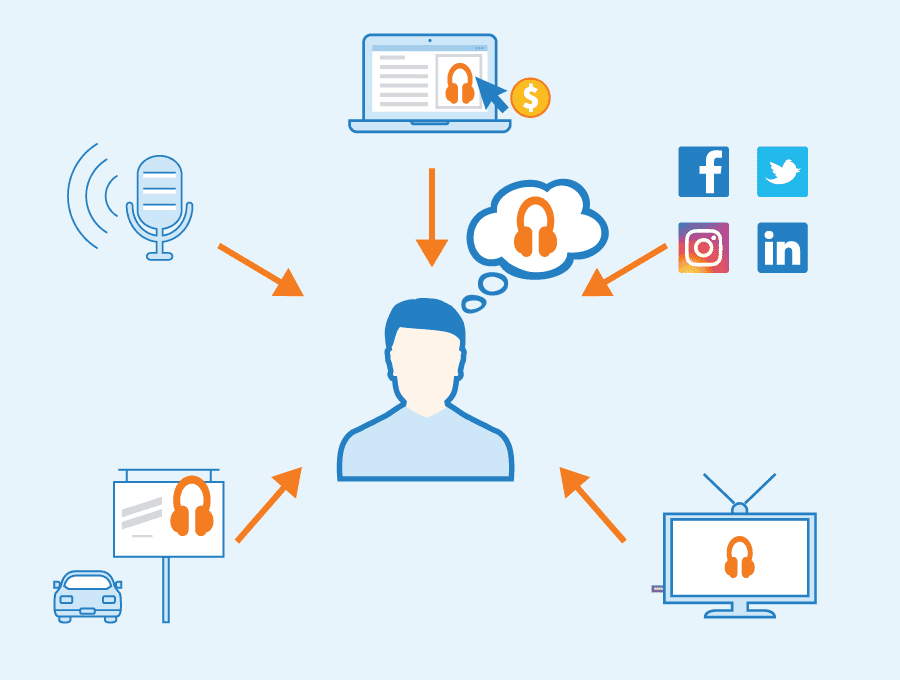
Omnichannel That Actually Feels Human: LinkedIn + Email + Messaging + Events
If there’s one thing Asia’s B2B teams are learning, it’s this: your buyers aren’t living in a single channel. They might discover you on LinkedIn, verify you through Google, ask peers in a community, and then message someone privately before ever booking a call. The future of B2B lead gen in the region is omnichannel—but it has to feel coordinated, not chaotic.
Expect more campaigns that blend:
- LinkedIn thought leadership (to build credibility)
- Email (for deeper context and nurture)
- Messaging apps (for speed and convenience—used carefully and respectfully)
- Webinars and roundtables (to spark high-intent engagement)
- Retargeting ads (to stay top-of-mind without being intrusive)
In many Asian markets, relationship-building still matters a lot, and messaging platforms can play a role—especially when prospects prefer quick questions over formal calls. The trick is tone: helpful, brief, and relevant. Nobody wants copy-paste spam showing up in their inbox or chat.
This is where B2B Lead Generation for Asia becomes a craft. The most effective teams won’t just “run channels.” They’ll design sequences that match buyer psychology:
- Spark interest with a sharp insight
- Prove credibility with a case study or customer story
- Reduce risk with implementation and security details
- Make the next step simple: a short discovery call or a tailored audit
And events? They’re evolving too. Smaller executive roundtables and industry-specific meetups are often outperforming massive conferences because they create higher-trust conversations and real follow-up opportunities.
If your omnichannel approach feels like one connected conversation—congrats, you’re ahead of the curve.
Privacy-First Lead Generation: Trust, Compliance, and Better Data Hygiene
Asia isn’t one regulatory environment—it’s a patchwork. Data privacy expectations vary by country, but the overall direction is clear: buyers and regulators want more transparency, more control, and fewer shady tactics. This is pushing B2B teams toward privacy-first strategies that don’t rely on questionable data sources.
The future will reward companies that treat data like an asset to protect, not a resource to exploit. That means clearer consent practices, better CRM hygiene, and smarter use of first-party data—website engagement, events, email opt-ins, and customer interactions.
Key trends you’ll see:
- Higher emphasis on consent-based growth: gated assets with real value, not generic PDFs.
- Stronger lead qualification: fewer “junk leads,” more sales-ready opportunities.
- Cleaner attribution: focusing on what you can measure reliably (and being honest about what you can’t).
- Brand trust becoming measurable: response rates and conversion rates increasingly correlate with perceived credibility.
What this changes in practice:
- Teams will invest more in content that earns opt-ins (industry benchmarks, templates, ROI tools).
- Sales outreach will lean on context (“Saw your team attended our webinar on X…”) rather than vague claims.
- Measurement will shift toward pipeline quality metrics: influenced revenue, sales cycle velocity, and close rate by channel.
If you’re building B2B Lead Generation for Asia strategies for the next few years, privacy-first isn’t a constraint—it’s a competitive advantage. The companies that are transparent and respectful will stand out, especially as inbox fatigue and spam filters keep getting harsher.

Partner-Led Growth Takes Center Stage: Ecosystems Beat Lone-Wolf Selling
Across Asia, some of the best B2B pipelines won’t come from ads or cold outreach—they’ll come from ecosystems. Think systems integrators, cloud providers, telcos, industry associations, marketplaces, and niche consultants who already have trust with the exact buyers you want. As competition tightens and buyers get more risk-aware, “borrowed credibility” through partners becomes a serious advantage.
What’s changing is how structured partner-led growth is becoming. It’s not just informal referrals anymore. High-performing teams are building repeatable partner motions: shared messaging, co-branded assets, joint webinars, and clear rules for lead ownership and follow-up. In practical terms, it’s a pipeline engine where both sides win—and buyers get a smoother experience because the solution feels pre-validated.
Here’s what tends to work well in Asia’s multi-market reality:
- Market-specific partner plays: A partner strong in Singapore may not help you in Indonesia or Japan. Teams are building localized partner maps instead of one “APAC partner program.”
- Co-selling kits that reduce friction: One-page solution briefs, integration diagrams, and implementation timelines partners can forward internally.
- Joint events with real audiences: Smaller roundtables often outperform big webinars because attendees come pre-qualified and conversations are deeper.
- Partner enablement that doesn’t waste time: Short training, ready-to-use email copy, and a simple process for registering opportunities.
A helpful reference for partnership and channel strategy frameworks (broad but practical) is HubSpot’s partner resources: https://www.hubspot.com/partners
The big idea: when buyers are cautious, they prefer “known paths.” Partners create those paths—especially in industries where compliance, integration, or operational risk can stall deals.
From Leads to Revenue: The Rise of Conversion-First Lead Gen Operations
In the next wave of B2B growth across Asia, the winners won’t be the teams with the most leads—they’ll be the teams with the cleanest conversion path. That means fewer leaky funnels, tighter handoffs, faster follow-ups, and content that moves deals forward (not just content that gets clicks).
This is where lead generation starts behaving like a product: instrumented, measured, optimized, and continuously improved. Marketing, sales, and operations are increasingly aligning around shared pipeline outcomes—because vanity metrics don’t pay the bills.
Trends you’ll see accelerating:
- Speed-to-lead becomes non-negotiable: The first vendor to respond—thoughtfully—often shapes the entire evaluation. Automations will help, but the message still needs a human touch.
- Lifecycle scoring over basic lead scoring: Not just “job title + company size,” but behavior patterns across content, events, and site engagement that better predict readiness.
- Content designed for deal stages: Early-stage insight pieces, mid-stage proof (case studies, ROI), late-stage risk reducers (security, onboarding plans, stakeholder FAQs inside a one-pager).
- Localization beyond translation: Local proof points, local use-cases, and region-relevant objections. A beautifully written English asset can still underperform if it doesn’t match local buying reality.
If you want a strong north-star metric, track: qualified pipeline generated, sales cycle velocity, and close rate by channel—then double down where those three improve together.
For practical guidance on building measurable customer journeys, Google’s analytics resources can help: https://support.google.com/analytics/
Wrap-up thought: the future isn’t about louder marketing—it’s about cleaner systems and sharper relevance. Build trust early, personalize intelligently, diversify channels, and engineer the conversion path like it matters—because it does.


