

If your targeting says “Asia” and your messaging says “global solution for everyone,” you’re basically trying to sell with a blindfold on. Asia isn’t a single market—it’s a collection of very different buying habits, decision speeds, compliance needs, and trust expectations. The fastest way to increase conversions is to segment by how companies buy, not just where they’re located.
Start with three practical layers of segmentation:
- Maturity level: Are you selling to digitally mature teams (often quicker evaluation, heavier ROI proof) or traditional industries (longer cycles, more stakeholder involvement)?
- Procurement style: Some markets lean heavily toward formal RFPs and vendor lists, while others move faster through relationship-led referrals and partner recommendations.
- Risk tolerance: In regulated sectors (finance, healthcare, public sector), conversions jump when you lead with compliance and proof; in high-growth sectors, speed and outcomes can matter more.
Then, build “mini-ICP” profiles that reflect reality:
- Country/region + industry + company size
- Primary decision-maker and key influencers
- Typical objections (data residency, integrations, support SLAs, budget cycles)
- Proof needed to say yes (case studies, certifications, pilots, references)
Here’s the kicker: once your segmentation is clear, your campaigns become easier to optimize. Your ads, landing pages, and outbound sequences can speak directly to the buyer’s world. That’s where B2B Lead Generation for Asia starts turning into predictable pipeline instead of “meh” click-through rates.
If you want a clean, scalable structure, build campaigns around clusters (e.g., “SEA mid-market SaaS,” “Japan enterprise manufacturing,” “India IT services”) and tailor your hooks, proof, and CTAs per cluster. Suddenly, lead quality improves—and your sales team stops complaining that marketing is handing them tire-kickers.
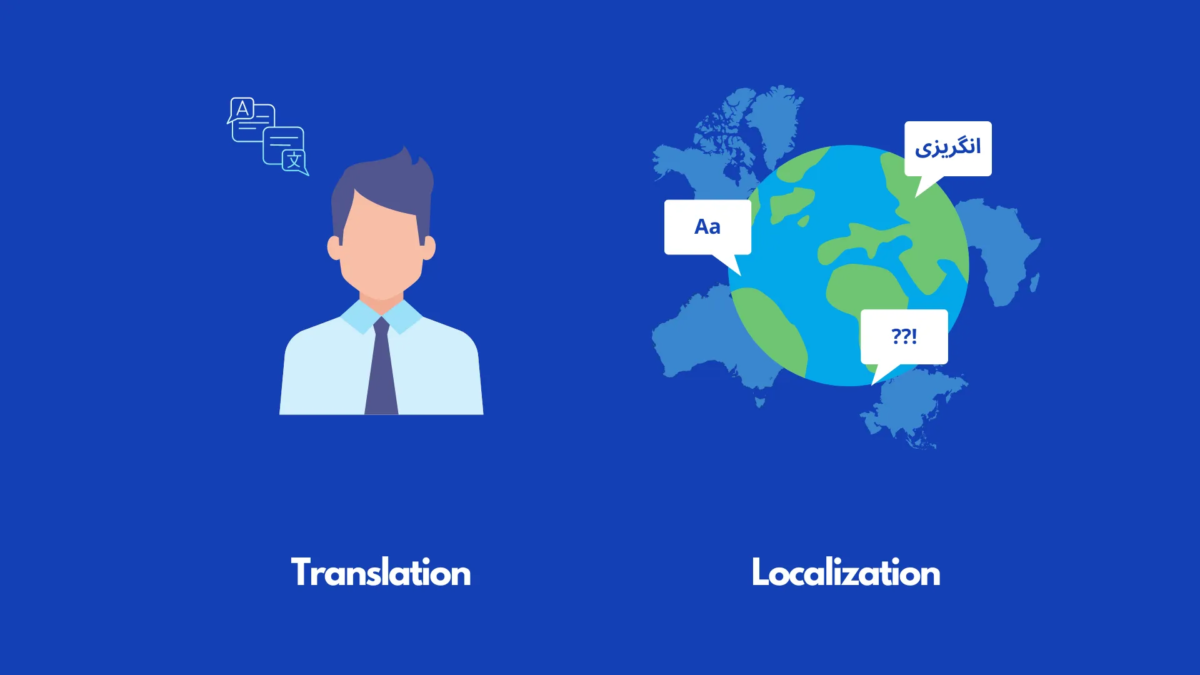
Localization That Converts—Go Beyond Translation and Nail Trust
Translation is table stakes. Conversion comes from local relevance—the kind that makes a buyer think, “Okay, these people get us.” In many Asian markets, trust isn’t assumed; it’s earned through signals: credibility, consistency, and cultural fluency.
High-converting localization focuses on five areas:
- Value proposition framing
Don’t just say you “increase efficiency.” Say exactly what that means in their world: fewer manual workflows, faster approval cycles, reduced compliance risk, or improved uptime. - Proof that feels familiar
A strong case study from “a global company” is good. A case study from a similar industry in-region is better. Add locally recognizable logos (with permission), regional metrics, and specific outcomes. - Offer alignment
In some markets, “Book a demo” is a big ask. “Get a benchmark report,” “See pricing ranges,” or “Request a tailored audit” can convert better—especially for top-of-funnel. - Pricing and procurement clarity
Buyers hate surprises. Even if you can’t publish full pricing, give ranges, packaging logic, and what drives cost (seats, usage, modules). This reduces friction and filters out poor-fit leads. - Trust assets
Think: security pages, compliance notes, uptime status, customer support coverage, onboarding plans, and implementation timelines. These are conversion boosters, not boring extras.
A practical move: build localized landing pages by cluster and include region-specific proof, a relevant CTA, and a clear next step. If you’re serious about scaling, use a hub page that clearly positions your service and routes visitors by region/industry—like this: B2B Lead Generation for Asia.
Bottom line: when buyers feel understood, they move faster. Localization isn’t decoration—it’s your conversion lever.
Win Where Buyers Actually Are—A Channel Mix That Drives Intent
If your plan is “run LinkedIn ads and hope,” you’ll get leads… but not always the kind you want. High-converting lead gen in Asia works best with a channel mix that captures both intent and credibility. Think of it like a relay race: one channel sparks awareness, another builds trust, and a third closes the loop into booked meetings.
Here’s a strong, conversion-focused mix:
- LinkedIn (ABM + retargeting): Best for targeting job titles and companies, especially in B2B SaaS, tech, consulting, and enterprise services. Run awareness ads to warm audiences, then retarget site visitors with proof-based creatives (case study snippets, ROI stats, webinar invites).
- SEO for high-intent searches: Capture demand from buyers already looking. Build pages around pain + solution queries, industry use cases, and comparison-style “what to look for” content. (This is where B2B Lead Generation for Asia content can quietly become a pipeline machine.)
- Webinars and virtual events: In many Asian markets, education sells. Position webinars as “expert briefings” with practical takeaways. Follow up with a tailored offer (audit, assessment, roadmap call).
- Partner-led co-marketing: Resellers, consultants, associations, and ecosystem partners can accelerate trust. A warm referral can outperform a cold lead by a mile.
- Industry events (selectively): Don’t just sponsor and pray. Pre-book meetings, run targeted outreach to attendee lists, and use a post-event nurture sequence within 24 hours.
Pro tip: align your channels with funnel stages. For example:
Awareness (LinkedIn/video) → Consideration (webinar/case study) → Conversion (retargeting + sales enablement landing page)
And don’t sleep on operational details: UTM discipline, lead source tracking, and consistent messaging across touchpoints. When your channels “talk to each other,” conversions jump—and your CAC stops doing gymnastics.

Account-Based Marketing That Doesn’t Feel Robotic—Make ABM Human
ABM is powerful in Asia, especially for enterprise deals and multi-stakeholder buying committees. But here’s where teams mess up: they treat ABM like a spreadsheet exercise—blast a templated sequence, run a few ads, and call it “personalized.” Buyers can smell that from a mile away.
High-converting ABM in the Asian market is built on relevance + relationship + proof.
Start with a tight account list:
- Prioritize accounts with clear fit (industry, tech stack, growth signals, hiring trends)
- Tier them (Tier 1: high-touch, Tier 2: semi-personalized, Tier 3: scalable personalization)
- Map stakeholders (economic buyer, technical buyer, operations owner, procurement)
Then, build “micro-campaigns” that feel made for them:
- A landing page tailored to the account’s industry and likely use case
- Ads that speak to their pain points (not your features)
- Content that reduces risk: implementation plan, security docs, migration timelines, and ROI examples
The biggest conversion unlock? Local credibility. If you can reference regional case studies, local support coverage, or compliance readiness, ABM conversion rates tend to improve. Add social proof in a way that feels natural: “Here’s how a similar team reduced cycle time by 28%,” not “We’re #1 worldwide.”
ABM follow-up should also match cultural expectations—direct but respectful, confident but not pushy. Instead of “Can you jump on a call tomorrow?” try “Would a 15-minute discovery chat next week be helpful to see if this fits your workflow?”
Finally, synchronize marketing and sales. When marketing warms an account and sales follows up within hours (not days), your ABM becomes a pipeline engine—especially when paired with the right B2B Lead Generation for Asia landing experiences.
From Click to Conversation—Conversion Tweaks That Lift Lead Quality
You can do everything right—smart targeting, strong messaging, great channels—and still lose the deal on the landing page. Why? Because conversion is usually killed by tiny friction points: unclear CTAs, long forms, slow follow-up, and “trust gaps” that make buyers hesitate.
Here are high-converting fixes that reliably work:
1) Match the landing page to the ad promise
If the ad says “Reduce onboarding time,” the page should open with that same promise—plus a quick proof point. Don’t make people hunt.
2) Use a two-step conversion
Instead of a single big form, try:
- Step 1: “Get the playbook / benchmark / checklist” (low friction)
- Step 2: “Want a tailored walkthrough?” (higher intent)
3) Shorten forms and add smart fields
Ask only what sales truly needs. Name, work email, company, role, and one qualifier question is often plenty. You can enrich the rest later.
4) Add buyer-friendly proof above the fold
- 1–2 strong metrics (time saved, cost reduced, revenue impact)
- A recognizable customer logo row (with permission)
- A short testimonial that mentions a real outcome
- Security/compliance badges or links to relevant documentation
5) Speed-to-lead is your secret weapon
In many markets, whoever replies first wins. Aim for follow-up within minutes (or at least under an hour), and route leads to the right rep based on region and industry.
6) Build a “procurement-ready” path
Enterprise buyers often need internal justification. Offer assets like: one-page overview, implementation plan, security summary, and a pricing framework. This reduces stalls and boosts conversion from MQL to SQL.
When you combine these changes with consistent messaging and a clear positioning around B2B Lead Generation for Asia, you don’t just get more leads—you get better leads, and your close rate tends to rise right along with them.

Partner-Led Growth in Asia—Turn Trusted Networks Into Warm Pipeline
In many parts of Asia, partnerships aren’t just a “nice-to-have” channel—they’re a shortcut to trust. When buyers already rely on a local consultancy, systems integrator, distributor, or industry association, your brand can borrow credibility the moment you show up as a recommended option. And that can compress sales cycles in a big way.
Start by identifying partner types that match your offer and deal size:
- Consultancies and agencies that influence strategy and vendor selection
- System integrators (SIs) that implement platforms and control project scope
- Technology ecosystem partners (CRM, ERP, cloud providers, marketplaces)
- Industry communities and associations that can co-host events or content
- Local resellers where relationship-driven selling is the norm
Then, design a partnership motion that’s easy to activate. The mistake most companies make is assuming partners will “just sell it” because the product is great. Partners need enablement, incentives, and a simple path to revenue.
High-converting partner tactics include:
- Co-branded offers: “Regional benchmark report,” “readiness assessment,” or “compliance audit” that partners can promote as a value add
- Co-selling playbooks: clear qualification criteria, talk tracks, objection handling, and a defined handoff process
- Shared proof: case studies showing joint outcomes, ideally in-region
- Partner landing pages that match the exact audience they serve and track referrals cleanly
Also, keep it local. A SEA partner campaign doesn’t need to look like a Japan partner campaign. Different markets respond to different trust signals, levels of formality, and call-to-action styles.
When partnerships are built intentionally, they complement your paid and organic strategy beautifully. And if you anchor your positioning around B2B Lead Generation for Asia, partner referrals land on messaging that feels consistent, credible, and conversion-ready.
The Nurture Engine That Makes “Not Now” Turn Into “Let’s Talk”
Here’s the truth: a large portion of B2B leads in Asia aren’t unqualified—they’re just not ready yet. Budget cycles, internal alignment, vendor approvals, or competing priorities can delay decisions. That’s why the best teams don’t rely on a single follow-up email and a “checking in” message. They build a nurture system that educates, reassures, and reactivates interest at the right moment.
A high-converting nurture engine has three parts:
1) Segmentation-based sequences
One generic drip campaign won’t cut it. Segment by industry, pain point, and stage. A lead from manufacturing evaluating automation should get a different sequence than a fintech lead worried about compliance and risk.
2) Proof-first content that reduces friction
Instead of pushing demos nonstop, deliver assets that help buyers make an internal case:
- One-page overview (problem → solution → outcomes)
- ROI calculator or sample business case format
- Implementation timeline and onboarding plan
- Security/compliance summary (especially for enterprise)
- Short case studies with real numbers and context
3) Multiple touchpoints, not just email
Email is fine, but it’s rarely enough. Mix in:
- Retargeting ads that reinforce proof points
- LinkedIn touches from sales (thoughtful, not spammy)
- Webinar invites tied to their specific problem
- “Checkpoint” offers: audit, assessment, benchmark, or roadmap review
The real conversion lift comes from timing and relevance. Use intent cues—repeat visits to pricing pages, time spent on case studies, webinar attendance—to trigger a sales outreach that feels helpful rather than pushy.
When your nurture flows are aligned with your positioning and landing pages, your pipeline becomes steadier and less dependent on constant new lead volume. In other words, B2B Lead Generation for Asia stops being a campaign—and becomes an always-on growth system that keeps producing opportunities even when the market gets noisy.


