
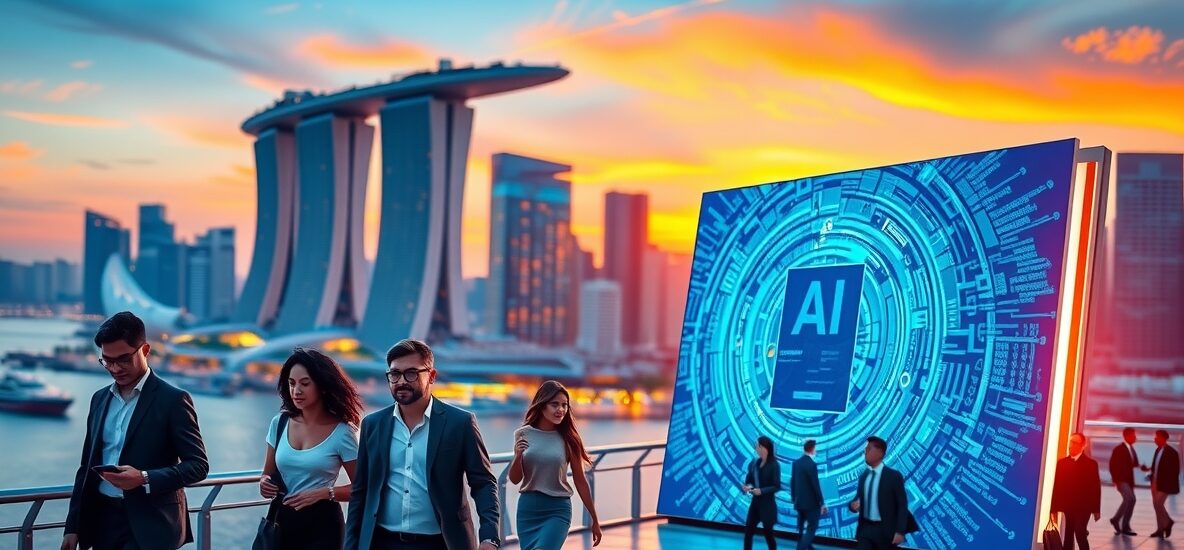
Introduction: In Singapore, Relevance Is the New Currency
Singapore is not a forgiving market. Consumers are digitally fluent, time-poor, and intolerant of irrelevance. Brands here are judged in seconds, not minutes. If your message doesn’t land immediately, you’re ignored—and often forgotten. This reality has pushed personalization from a marketing tactic into a commercial imperative.
Every interaction generates data, but data alone does nothing. What separates high-growth brands from stagnant ones is the ability to turn signals into action. Companies investing in AI Marketing are transforming behavior into real-time relevance that feels intuitive rather than intrusive.
Personalization today is no longer about surface-level customization. It’s about predicting intent, removing friction, and guiding customers toward decisions that feel natural. In Singapore’s saturated digital environment, this precision directly impacts conversions, loyalty, and long-term brand equity.
Brands that fail to personalize fade into noise. Brands that master it compound results. AI is the difference.

From Guesswork to Precision: What AI-Powered Personalization Really Means
Traditional personalization relied on assumptions. AI-powered personalization relies on evidence. Instead of static segments, AI systems continuously learn from behavior, context, and timing to decide what experience to deliver next. This capability sits at the core of modern AI Marketing.
AI analyzes browsing behavior, engagement depth, interaction patterns, and historical data simultaneously. Content adjusts. Offers shift. Messaging adapts—often within milliseconds. The experience evolves with the customer rather than forcing the customer to adapt to the brand.
What makes this approach powerful is scale. As interactions increase, predictions improve. In Singapore’s high-density digital ecosystem, this feedback loop accelerates quickly, allowing brands to optimize faster than human teams ever could.
Instead of asking what might work, AI identifies what does work—then repeats it with surgical precision through AI Marketing.
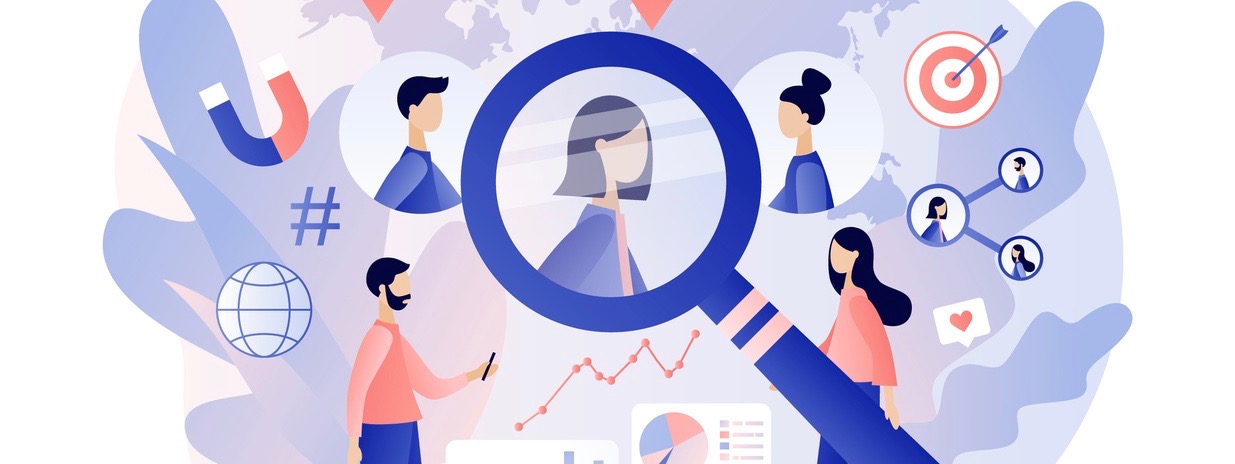
The Singapore Consumer Mindset: Why Personalization Drives Action
Singapore consumers expect efficiency. They engage with brands that respect their time, understand their needs, and reduce decision fatigue. Anything less feels outdated.
Personalization works because it aligns with how people want to interact—quickly, seamlessly, and with purpose. When brands deploy AI Marketing effectively, they stop interrupting and start assisting.
Trust plays a critical role. Singapore consumers are highly aware of data usage and privacy. Personalization that feels excessive erodes confidence. Personalization that feels helpful builds loyalty. AI allows brands to walk this line carefully by using behavioral signals rather than invasive tactics.
When a brand consistently delivers relevant experiences without friction, conversion becomes a natural outcome. Customers don’t feel persuaded—they feel understood. That understanding is what scalable AI Marketing enables.
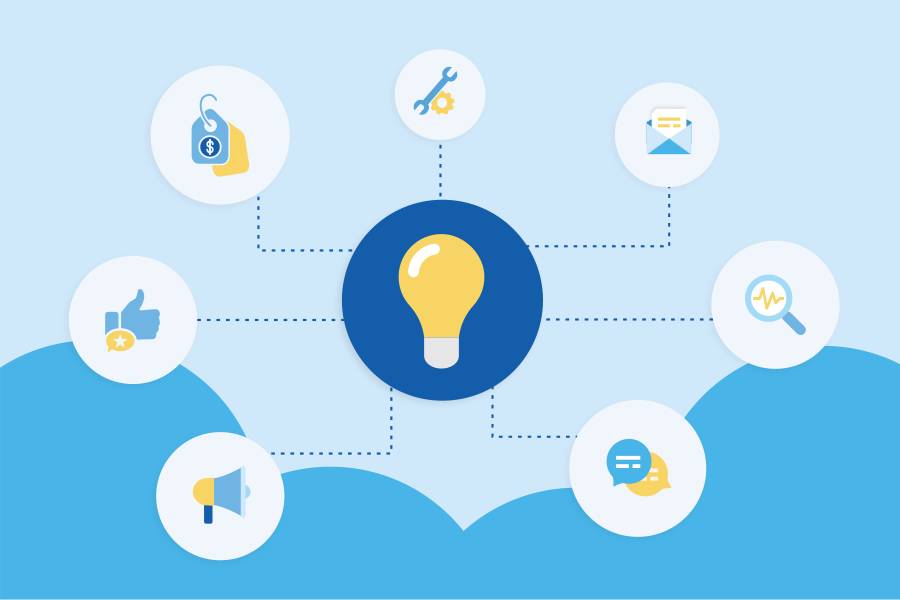
High-Impact Use Cases Where AI Personalization Wins
AI-powered personalization delivers the most value where intent is strongest. Personalized product discovery is one of the clearest examples. By analyzing browsing and purchase behavior, AI surfaces options that align with real preferences, accelerating decisions and increasing conversion rates.
Dynamic digital experiences are another high-impact use case. Websites and apps adapt based on user context—new visitors receive guidance, returning users receive shortcuts. This responsiveness is a defining trait of effective AI Marketing.
Personalized messaging also plays a decisive role. AI determines optimal timing, frequency, and content across email, messaging apps, and push notifications. The result is higher engagement with less fatigue.
Promotions benefit as well. AI enables targeted incentives instead of blanket discounts, protecting margins while increasing conversion probability. These outcomes are not theoretical—they are the practical returns of disciplined AI Marketing.
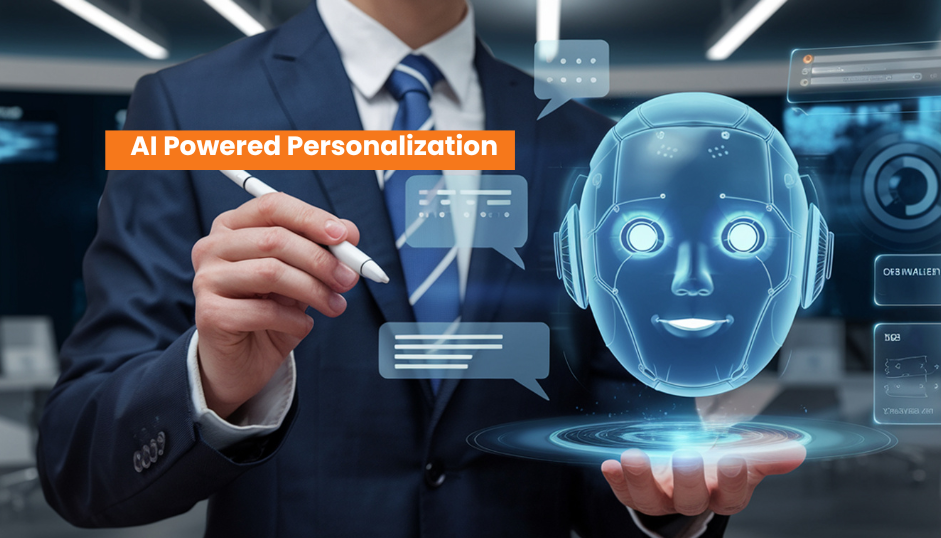
Why AI-Powered Personalization Converts Better—Without the Hype
Conversions improve when friction disappears. AI-powered personalization removes unnecessary steps, reduces cognitive load, and presents the most relevant option first. This efficiency is the real payoff of strategic AI Marketing.
When customers don’t have to search, compare endlessly, or second-guess, action follows naturally. AI identifies when intent peaks and responds immediately.
Upselling and cross-selling also improve when powered by AI. Instead of generic add-ons, customers see logical extensions that make sense in context. The experience feels supportive, not sales-driven.
In a high-cost acquisition market like Singapore, improving conversion rates often delivers greater returns than increasing traffic. This is where well-executed AI Marketing consistently outperforms traditional tactics.
The Real Challenges—and How Disciplined Brands Overcome Them
AI-powered personalization fails when foundations are weak. Fragmented data, disconnected platforms, and unclear objectives undermine performance. Brands that succeed treat data infrastructure as a strategic asset, not a technical afterthought.
Privacy is equally critical. Singapore brands must design AI Marketing strategies that respect consent, transparency, and regulatory expectations.
Another common mistake is over-automation. AI should inform decisions, not replace judgment. Human oversight ensures brand voice, ethical boundaries, and customer trust remain intact.
Winning brands start focused. One journey. One goal. One metric. They test, learn, and scale deliberately—using AI Marketing as infrastructure, not experimentation.
Conclusion: Personalization Is No Longer Optional—It’s Infrastructure
AI-powered personalization has crossed the threshold from innovation to expectation. In Singapore’s competitive digital economy, relevance is the foundation of growth.
Brands investing in AI Marketing are not just improving campaigns—they are building adaptive systems that learn, respond, and improve continuously.
The future belongs to brands that listen better than they broadcast, respond faster than competitors, and respect customers while serving them intelligently.
AI-powered personalization isn’t a trend. Powered by AI Marketing, it is the operating system for modern growth—and the clearest path to sustained conversion performance.


