

Introduction: When Survival Demands Reinvention
Singapore’s business landscape moves fast, and standing still is not an option. For one ambitious company, the realization hit hard: traditional marketing methods were no longer enough. Campaign performance was stagnating, costs were rising, and customers expected hyper-personalized engagement that old strategies couldn’t deliver.
To remain competitive, the leadership embraced a radical idea: transforming their marketing approach using AI Marketing. This wasn’t about chasing trends—it was about survival. AI Marketing promised actionable insights, predictive capabilities, and automation at a scale humans alone couldn’t manage.
The company recognized that Singapore’s digitally mature market demanded agility. Digital adoption rates are among the highest globally, and consumers expect seamless, relevant interactions. By turning to AI Marketing, the business could anticipate customer needs, optimize campaigns in real-time, and achieve measurable growth.
This blog tells the story of how the business navigated this shift, the challenges faced, and the lessons learned. It’s a blueprint for any company seeking to leverage AI Marketing in a complex, fast-moving environment.

Before the Storm: A Traditional Marketing Engine Under Pressure
Before AI, marketing decisions relied on intuition, basic analytics, and monthly performance reports. Email campaigns, social ads, and website SEO were managed manually. Campaigns were reactive rather than predictive, and data silos made it impossible to connect insights across channels.
Customer expectations were evolving faster than the team could respond. Singaporean consumers demand tailored, timely communication. Static campaigns failed to deliver, and marketing ROI suffered. It became clear that traditional approaches could no longer sustain growth.
Turning to AI Marketing allowed the company to unify data sources, identify audience patterns, and automate repetitive tasks. AI-driven insights helped prioritize campaigns, target the right segments, and adjust strategies in real-time.
This shift marked the start of a cultural change. Leadership realized that integrating AI Marketing was not just a technical implementation—it was an organizational transformation, reshaping workflows, team responsibilities, and decision-making processes.
The Turning Point: Recognizing the Strategic Imperative
The wake-up call came during a quarterly review. Despite increasing ad spend, engagement and conversion metrics were declining. Leadership realized the company needed a fundamentally new approach.
AI Marketing provided the solution. By leveraging predictive analytics, machine learning, and behavioral modeling, campaigns could be tailored to individual customer journeys. Goals became clear: improve personalization, reduce costs, and drive sustainable growth.
This required a shift in mindset. AI Marketing was no longer optional—it was central to the business strategy. The company embraced a disciplined approach: auditing data, identifying gaps, and prioritizing high-impact initiatives first.
By adopting AI Marketing, the business began to see that marketing could be both creative and intelligent, merging human insight with machine precision.

Building the Engine: Implementing AI with Intent
Implementation began with data consolidation. Customer interactions, campaign metrics, and CRM data were centralized. Machine learning models predicted engagement, optimized bidding strategies, and personalized communications in real-time.
The marketing team underwent retraining to understand AI outputs and interpret predictive insights. Tools became extensions of human strategy, amplifying decision-making without replacing creativity. Early pilot campaigns were tested, refined, and scaled.
AI Marketing became the backbone of the strategy. Automated segmentation allowed the team to target niche audiences with precision, while AI-driven insights ensured continuous improvement across channels.
This stage proved that AI Marketing is more than technology—it is a strategic capability that transforms how businesses understand and interact with their customers.
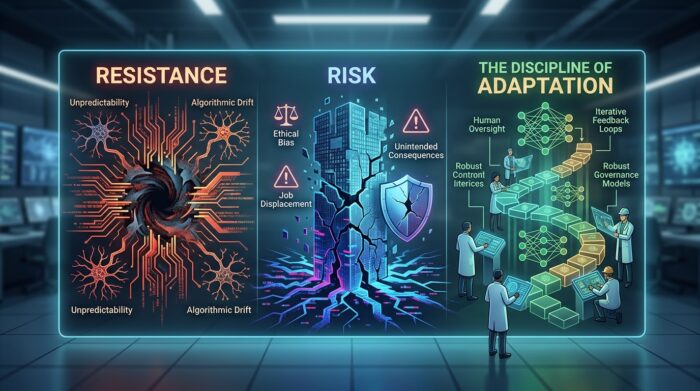
Resistance, Risk, and the Discipline of Adaptation
Change was not easy. Teams questioned whether AI would replace them, budgets were scrutinized, and success was not immediate. Leadership emphasized that AI Marketing complements human skills rather than substitutes them.
By prioritizing transparency and governance, the company maintained compliance with Singapore’s data regulations. Pilot projects demonstrated tangible benefits, building confidence across the organization. Resistance gradually gave way to engagement.
The business learned that adoption requires patience, structured implementation, and a clear demonstration of value. With AI Marketing, campaigns evolved from static execution to dynamic, data-driven orchestration.

Results That Matter: From Efficiency to Strategic Dominance
Within a year, key performance metrics improved dramatically. Customer acquisition costs fell, engagement rates rose, and campaigns became self-optimizing. AI Marketing allowed real-time adjustments and smarter allocation of resources.
The company could now predict customer behavior, identify high-value segments, and personalize messaging at scale. AI Marketing provided the intelligence to make every marketing dollar count.
Beyond numbers, the transformation enabled strategic foresight. Leaders could model scenarios, anticipate market shifts, and respond with agility. The organization evolved from reactive to proactive, from operational to strategic—all powered by AI Marketing.
Conclusion: The Discipline of Forward Motion
This journey demonstrates that AI Marketing is not just a tool—it’s a discipline. For businesses in Singapore, where speed, adaptability, and insight define success, embracing AI is no longer optional.
The transformation showed that integrating AI Marketing requires vision, discipline, and cultural alignment. Organizations that move decisively gain not only efficiency but also strategic intelligence, predictive insight, and sustained growth.
The future belongs to those willing to evolve. Businesses that leverage AI Marketing will redefine customer engagement, outperform competitors, and secure long-term resilience.