
LinkedIn can be highly effective for B2B lead generation in Asia—when you treat it like a revenue channel, not a “post-and-hope” platform. Asia isn’t one market; it’s a mix of mature hubs (like Singapore and Hong Kong), fast-growth giants (like India and Indonesia), and relationship-driven ecosystems (like Japan and South Korea). The good news? LinkedIn is one of the few places where professionals across these markets gather with clear intent, job context, and business credibility built in. The catch? You need a regional strategy that respects how trust is built, how decisions get made, and how long cycles really take.
Below are the first five sections (around 300 words each), with practical tactics you can use immediately.
LinkedIn’s Real Strength in Asia: Trust at Scale (Not Just Reach)
If you’re using LinkedIn in Asia the same way you’d use it anywhere else—blast a generic pitch, link to a landing page, and cross your fingers—you’ll likely feel disappointed. But if you use LinkedIn for what it’s best at—credibility, precision targeting, and relationship-building—it can become a consistent pipeline engine.
In many Asian B2B markets, buyers are cautious. They want proof, track record, and reassurance that you’ll deliver what you promise. LinkedIn helps you “show your work” in a way a cold email often can’t. Your company page, leadership profiles, customer stories, and employee advocacy all become trust signals. That’s why LinkedIn can be particularly powerful for high-consideration offers: enterprise SaaS, IT services, industrial solutions, consulting, logistics, and specialized B2B solutions.
A practical way to frame it is this: LinkedIn doesn’t just generate leads; it manufactures confidence. When a prospect clicks your profile after a message and sees thoughtful posts, clear positioning, and credible experience, you’re no longer a stranger—you’re a known quantity.
If your focus is B2B Lead Generation for Asia, LinkedIn can act as the front door to your demand gen system—especially when you pair it with strong nurture (email, webinars, case studies, and follow-ups that match local buying cycles).
What tends to work best across Asia is a “trust ladder” approach:
- Start with insight (content that teaches or clarifies)
- Add evidence (proof points, outcomes, client logos where allowed)
- Create a low-friction next step (diagnostic call, benchmark report, short audit)
- Nurture patiently (multiple stakeholders, longer internal approvals)
LinkedIn rewards consistency. In Asia, consistency also signals reliability—one of the most underrated conversion factors there is.
Laser Targeting That Finds Buyers (Even in Complex Asian Markets)
One reason LinkedIn performs well for B2B in Asia is the data structure: job titles, seniority, functions, industries, company size, location, and skills. That’s a goldmine—if you build your targeting with intent, not vanity.
Start by mapping how decisions actually happen in your target market. In Singapore, you may find more centralized decision-making and faster cycles in mid-market firms. In Japan, consensus and internal alignment can stretch timelines. In India, speed can be high, but stakeholder involvement can also be broad. The targeting strategy shouldn’t just be “CEO/Founder.” It should reflect the real buying committee.
A simple targeting model that works well:
- Economic buyer: CEO, Managing Director, VP, Head of Department
- Technical buyer: IT Manager, Engineering Lead, Solutions Architect
- Champion/user: Ops Manager, Sales Ops, Marketing Manager, Procurement
- Influencers: Finance, Compliance, Security (especially in regulated industries)
Then build lists by country clusters and maturity:
- Regional HQ hubs: Singapore, Hong Kong (often regional decision centers)
- Scale markets: India, Indonesia, Philippines, Vietnam (volume + growth)
- Relationship/consensus markets: Japan, South Korea (trust + patience)
On LinkedIn, you’ll typically get better results when you narrow before you scale:
- Choose 1–2 core industries (e.g., fintech, logistics, manufacturing)
- Choose 3–5 job families (not 30 titles)
- Choose a clear “ideal company size” range
- Use exclusions (interns, students, irrelevant functions)
For outbound (DMs), build lists that are small enough to personalize:
- 100–300 accounts
- 2–6 relevant personas per account
- A message sequence that respects cultural tone (more on that below)
For paid ads, don’t jump straight into lead forms. Many Asian buyers want to browse first. A smart pattern is: awareness content → retargeting → conversion offer. It’s slower, sure—but it usually produces better-fit leads and fewer “curious clickers.”
Content That Builds Authority Across Asia (Without Sounding Like a Robot)
Content is where LinkedIn lead generation either turns into a flywheel—or fizzles out. In many Asian markets, prospects will “silent research” before they ever reply. They may read your posts for weeks, click your profile, and check mutual connections. So content isn’t fluff; it’s pre-selling.
The trick is to write like a helpful expert, not a corporate brochure. Skip buzzwords. Use clear, specific points that make buyers think, “Yep, this person gets it.”
High-performing content themes for B2B Lead Generation for Asia include:
- Local reality checks: “What changes in procurement when selling into Singapore vs. Japan?”
- Operational playbooks: “How to reduce sales cycle time when multiple stakeholders are involved”
- Decision-maker insights: “What CFOs in APAC usually ask before approving a new platform”
- Teardowns: “Why your lead form attracts students and job seekers (and how to fix it)”
- Proof with context: “What we changed to improve conversion quality (and what stayed the same)”
Format matters too. Across Asia, short, skimmable posts often outperform long essays—especially on mobile. Aim for:
- A strong hook in the first 2 lines
- Short paragraphs (1–3 lines)
- One core idea per post
- A clear, low-pressure CTA (“If you want the template, comment ‘APAC’”)
Also, don’t underestimate “authority by association.” If appropriate, tag partners, highlight ecosystem events, and reference credible sources such as LinkedIn’s own marketing and sales resources:
One more nuance: tone. In parts of Asia, aggressive claims can backfire (“We’re the #1 best…”). A steadier tone tends to land better: grounded confidence, real examples, and respectful language.
When your content feels like a useful conversation—not a pitch—your inbound DMs start warming up on their own.
Outreach That Gets Replies in Asia (Without Feeling Pushy or Salesy)
LinkedIn outreach works in Asia, but the style matters a lot. Many decision-makers have low tolerance for hard selling from strangers, especially if the message is generic or too familiar too fast. The winning approach is simple: relevance, respect, and a small next step.
A practical outreach framework that consistently performs:
- Context: why you’re reaching out (specific, not fluffy)
- Relevance: what you noticed (industry shift, role responsibility, company change)
- Value: one idea or insight (not a long pitch deck)
- Permission-based CTA: “Open to a quick 10-min chat?” or “Worth sharing a short checklist?”
Instead of “Hi, we help businesses grow. Want a demo?”, try something like:
- “Noticed you’re expanding across SEA—curious how you’re handling lead qualification across markets?”
- “A lot of APAC teams I speak with struggle with meeting quality from LinkedIn. Want a quick framework we use to filter for buyer intent?”
Two important Asia-specific tips:
- Mind hierarchy and formality: In some markets, a more formal greeting and respectful tone wins. Overly casual openers can feel off.
- Respect timing: Many prospects won’t respond quickly. A gentle follow-up with new value (not “just checking in”) works better.
Sequence matters. A clean, non-annoying cadence:
- Day 1: Connection request (short, relevant)
- Day 3: Thank you + 1 insight
- Day 7: Share a resource (template, short guide, checklist)
- Day 14: Ask a single, specific question
- Day 21: Close the loop politely (“No worries if now isn’t the right time.”)
And here’s the part people skip: fix the profile first. Your profile is the landing page. If your headline is vague, your about section is jargon, or there’s no proof, outreach gets replies like… silence. Tighten:
- Headline: who you help + outcome
- About: problem → approach → proof → CTA
- Featured: 1–2 case studies, a lead magnet, and a booking link
This is where LinkedIn becomes a real system for B2B Lead Generation for Asia rather than a one-off hustle.
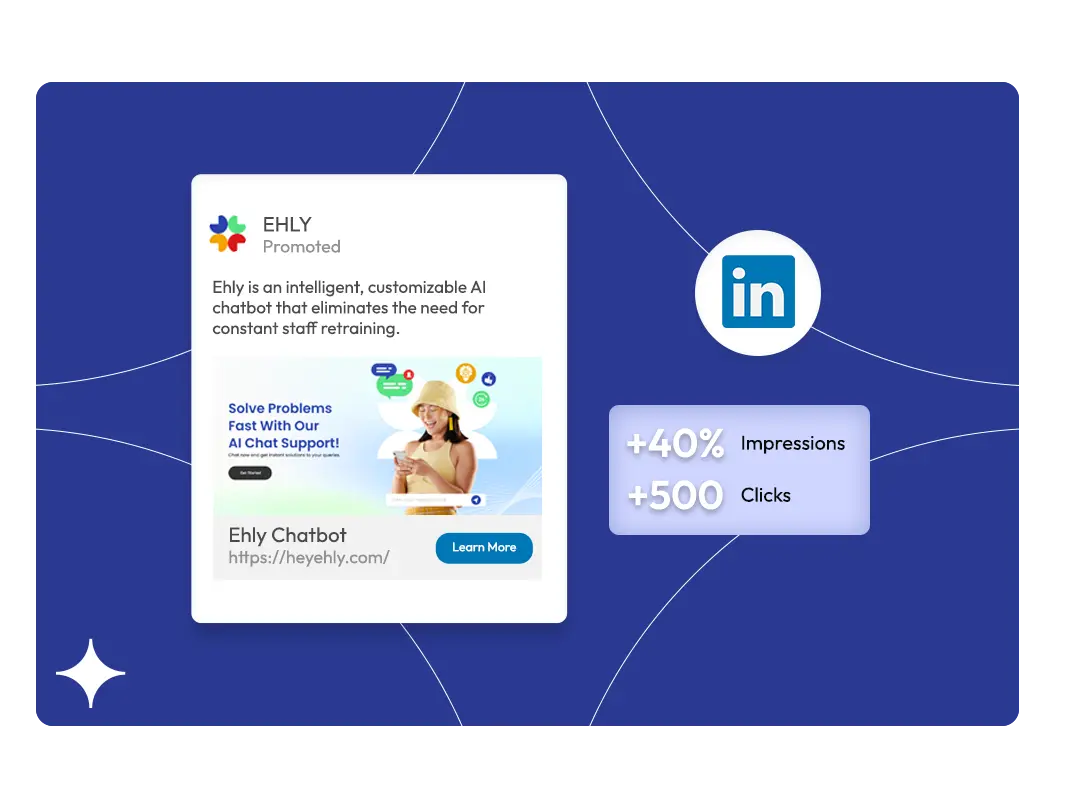
LinkedIn Ads in Asia: How to Avoid Expensive Leads and Get Real Buyers
LinkedIn ads can work very well in Asia, but they’re often misused. The platform is premium-priced, so if you run broad targeting with a generic “Book a demo” CTA, you may end up paying for low-intent leads who aren’t ready—or aren’t even the right persona.
A better approach is to design LinkedIn ads like a two-step trust builder:
- Step 1: Earn attention with insight
- Step 2: Convert with a specific, high-value offer
What typically performs best:
- Thought leadership ads: Promote a strong post from a founder/executive
- Document ads: “APAC GTM Checklist” or “B2B Lead Quality Scorecard”
- Webinar/event ads: Especially effective for regional topics
- Retargeting ads: Target people who watched video, clicked, or visited pages
- Lead gen forms (carefully): Use stronger qualifying questions to reduce junk
If you’re targeting multiple Asian countries, consider segmenting campaigns by cluster rather than running one mega-campaign. Messaging that resonates in Singapore might not land the same way in Japan or Indonesia. Even small language choices matter: “ROI” vs “cost reduction,” “growth” vs “risk mitigation,” “speed” vs “reliability.”
To improve lead quality, add friction in the right places:
- Ask one qualification question (budget range, timeline, team size)
- Offer a diagnostic instead of a demo (“APAC pipeline audit”)
- Make your value proposition specific (“Reduce unqualified meetings by X process steps”) rather than vague (“Drive growth”)
Finally, don’t measure success by CPL alone. In Asia, where deal sizes and sales cycles vary widely, track:
- Qualified meetings booked
- Sales accepted leads
- Conversion to opportunity
- Opportunity value influenced by LinkedIn touchpoints
When LinkedIn ads are aligned with a solid nurture flow, they can become a dependable engine for B2B Lead Generation for Asia—especially for high-margin services and B2B solutions with clear differentiation.
A Repeatable LinkedIn Funnel for Asia That Turns Attention Into Meetings
If you want LinkedIn to produce predictable pipeline in Asia, you need a funnel that’s intentionally designed for how buyers behave: they browse first, validate credibility second, and only then engage. The goal isn’t to “go viral.” It’s to move the right people from awareness → trust → conversation.
Here’s a simple, reliable funnel you can implement without overcomplicating things:
Step 1: Profile = landing page (non-negotiable)
Before you run outreach or ads, tighten your profile so it answers three questions fast: Who do you help? What outcomes do you drive? Why should I trust you?
- Headline: target + outcome (avoid vague buzzwords)
- About: problem → approach → proof → call to action
- Featured: 1 case study, 1 lead magnet, 1 booking link
Step 2: Content that earns “silent trust”
Post 3–4x per week with themes that match regional pain points: multi-stakeholder approvals, longer sales cycles, procurement expectations, and localized GTM lessons. One strong post can warm up your next 30 outbound messages.
Step 3: A lead magnet that feels worth it
In many Asian markets, a direct “Book a demo” can feel premature. Instead, offer something practical:
- “APAC Lead Qualification Checklist”
- “SEA Market Entry Messaging Framework”
- “B2B Pipeline Health Scorecard”
Step 4: Outreach that feels like a conversation
Use a short sequence that references a specific post, role responsibility, or industry trend, then invite a low-friction next step (“Want the template?” / “Open to a quick 10-min benchmark chat?”).
Step 5: Nurture for conversion
Don’t stop at the first “no response.” Use light-touch nurture: a relevant case study, a short video, or a 1-page summary.
When this system is running, LinkedIn becomes a steady engine for B2B Lead Generation for Asia—not just a place to post updates.

How to Prove ROI in Asia: Track Pipeline, Not Just Clicks
LinkedIn can “feel” effective long before it’s measurably effective. That’s why the teams winning in Asia don’t obsess over likes or even cost per lead—they track what moves revenue: qualified meetings, sales acceptance, and opportunities created.
A practical measurement setup looks like this:
Start with the right success metrics
- Top of funnel (awareness): profile views, post saves, video watch time (signals of intent)
- Mid funnel (demand): connection acceptance rate, reply rate, landing page view-to-action rate
- Bottom funnel (pipeline): sales accepted leads, meetings held, opportunities created, deal velocity
Use simple attribution you can actually maintain
You don’t need perfect multi-touch attribution to make good decisions. You do need consistency:
- Add UTM links to all outbound/ads
- Use separate booking links for LinkedIn vs other channels
- In your CRM, capture “Lead Source: LinkedIn” and “Influenced by LinkedIn: Yes/No”
- Ask one intake question on forms: “Where did you first hear about us?”
Quality control: stop junk before it hits sales
LinkedIn can generate low-intent leads if you make it too easy to convert. Raise lead quality by:
- Adding one qualifying question (timeline/budget/team size)
- Requiring a business email where appropriate
- Offering “audit/assessment” instead of “free consultation” (reduces freebie hunters)
Common Asia-specific mistakes to avoid
- Running one campaign across all countries with identical messaging
- Targeting only CEOs (and missing the real champions and technical buyers)
- Being overly aggressive in DMs (trust is the currency)
- Judging success too early (many deals are influenced over weeks, not days)