

If you’ve ever launched a “perfect” campaign that worked in the US/UK and flopped in Asia, you’re not alone. Across Asia, trust signals (brand credibility, local proof, relationships) often matter as much as your offer. Decision-making is also more committee-driven in many industries, and buying cycles can hinge on regional compliance, language comfort, and who’s introducing you.
That’s why the smartest approach to B2B Lead Generation for Asia is rarely a single channel. It’s a coordinated mix that balances:
- Fast-start channels (outbound + LinkedIn) to open conversations quickly
- High-intent capture (search + local SEO) to convert active buyers
- Trust amplifiers (events, partners, communities) to shorten the “prove it” phase
Here are the six channels that consistently deliver across many Asian markets when localized properly:
- LinkedIn + targeted outbound (ABM-style prospecting, warm sequences, social proof)
- Local SEO + search landing pages (Google plus country-specific engines where relevant)
- Partner-led growth (integrators, resellers, associations, co-selling)
- Industry events and trade shows (where relationships still move budgets)
- Webinars + niche communities (education-driven trust building)
- B2B marketplaces and directories (intent-rich discovery and validation)
A quick rule of thumb: if you’re newer in a market, prioritize channels that “borrow trust” (partners, events, communities). If you already have awareness, lean harder into demand capture (search + retargeting) and scale outbound.
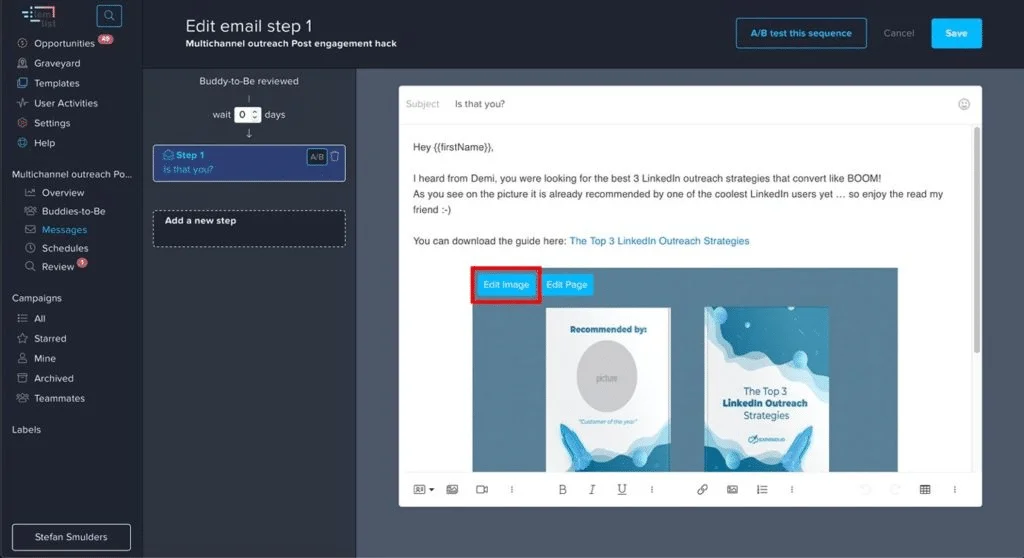
LinkedIn + Targeted Outbound: The Fastest Route to Qualified Meetings
For many B2B teams expanding across Asia, LinkedIn + outbound is the quickest way to start real pipeline—because you’re not waiting for traffic. You’re choosing accounts, choosing personas, and initiating conversations with a clear value angle.
What works best is precision, not volume. Asia-based buyers often respond better to outreach that feels credible and specific, not generic. A high-performing setup usually includes:
- Account list building: 50–200 target accounts per market (by industry, size, tech stack, hiring signals)
- Persona mapping: economic buyer + technical evaluator + local champion
- Localized credibility: regional case studies, client logos (where permitted), compliance notes, and relevant outcomes
- Multi-touch sequences: connection request → short insight → proof point → invite to a low-friction next step (audit, benchmark, 15-min fit call)
Practical tips that lift reply rates:
- Lead with a market-specific observation (“Singapore teams in X often struggle with Y due to…”).
- Replace “demo” with risk-free offers (assessment, teardown, benchmark, calculator).
- Use social proof that matches the region (even one local reference can beat ten global ones).
- Keep messages short, with one clear CTA.
Also, don’t treat LinkedIn like an island. The best teams run “LinkedIn + email” together, and they back it up with light retargeting so prospects see your name more than once before responding.
Search Demand Capture That Converts: Local SEO + High-Intent Landing Pages
Outbound creates demand. Search captures demand—and in Asia, that can be extremely profitable because searchers are often deep in evaluation mode. The key is building search presence that matches how people actually research vendors in each country.
Start with two building blocks:
1) Local SEO fundamentals (where applicable):
If you serve clients in-market, strengthen local signals—especially for service-led B2B. Your location pages should include clear service coverage, local proof, and trust markers (certifications, partnerships, testimonials). For Google-focused markets, a fully built Google Business Profile helps, even for B2B.
Helpful reference: https://www.google.com/business/ and Google’s SEO starter guidance: https://developers.google.com/search/docs/fundamentals/seo-starter-guide
2) “Problem-first” landing pages that match intent:
Instead of one generic “Solutions” page, create pages aligned to:
- Industry use cases (logistics, fintech, manufacturing, SaaS, etc.)
- Pain points (lead leakage, long sales cycles, low conversion, poor MQL quality)
- Buyer stage (comparison, vendor shortlist, implementation readiness)
Asia-specific nuance: search behavior can be multilingual. Even if you sell in English, localized pages (or at least localized proof and terminology) can lift conversions. In certain markets, regional search engines and platforms matter more, so your strategy should reflect where your buyers actually search.
When done well, search becomes a compounding asset for B2B Lead Generation for Asia because it keeps bringing in high-intent prospects long after the campaign budget stops.

Partner-Led Growth: The Shortcut to Warm Introductions and Faster Trust
In many Asian markets, partnerships aren’t “nice to have”—they’re a trust engine. A credible partner can do what months of ads can’t: validate you instantly and introduce you into the right rooms.
High-performing partner-led growth usually falls into a few buckets:
- System integrators / agencies / consultancies that influence vendor choice
- Distributors / resellers who already own relationships and procurement pathways
- Technology partners (platform ecosystems where your solution complements theirs)
- Industry associations that can put you in front of decision-makers quickly
The playbook is straightforward, but execution matters:
- Define partner-fit: What partner type wins your deals today, and why?
- Create a co-sell offer: A packaged outcome (not just “let’s collaborate”).
- Enable partners: one-page battle card, ideal customer profile, case studies, objection handling.
- Co-market consistently: joint webinars, shared events, co-authored guides, referral incentives.
- Track partner-sourced pipeline: measure intros, conversion rate, sales cycle length, and deal size.
A common mistake is chasing “big logo partners” without alignment. A smaller local partner with high relevance can outperform a global brand that doesn’t prioritize your joint motion.
To keep quality high, build a simple partner scorecard: lead volume, lead quality, speed-to-meeting, close rate, and expansion potential. Partner-led growth is one of the most reliable ways to scale in Asia without burning budget on cold traffic.
Credibility on Autopilot: Events, Webinars, Communities, and Marketplaces
If there’s one theme that cuts across Asia, it’s this: buyers reward credibility. That’s why the remaining three channels—events, webinars/communities, and marketplaces—work so well together. They don’t just generate leads; they generate confidence.
Channel #4: Industry events and trade shows
In sectors like manufacturing, logistics, healthcare, and enterprise IT, events are still where trust is built. Don’t just “buy a booth.” Win with:
- Pre-booked meetings (reach out 3–4 weeks ahead)
- A sharp hook (“Cut onboarding time by 30% in 60 days” beats “We’re innovative”)
- Post-event speed (follow-up within 24–48 hours with a clear next step)
Channel #5: Webinars + niche communities
Webinars work best when they’re practical and specific: teardown sessions, regional benchmarks, buyer panels, and “how-to” playbooks. Communities (industry groups, private networks, chat-based circles) help you stay visible without constantly selling. Think “show up and teach,” then let interest come to you.
Channel #6: B2B marketplaces and directories
For many tech and services categories, buyers validate vendors through directories and marketplaces. The win is strong positioning: crisp categories, proof points, integration details, and reviews/testimonials (where relevant). Example marketplace to explore if you’re in software: https://aws.amazon.com/marketplace/
Combined, these channels are powerful for B2B Lead Generation for Asia because they repeatedly place you in trusted contexts—so when prospects finally talk to you, you’re not a stranger.
Choose the Right Channel Mix by Market (Because Asia Isn’t One Playbook)
A lot of teams lose money in Asia by treating it like a single region. The channels are the same on paper, but the weights change by country, language comfort, and how trust is built locally. If you’re serious about B2B Lead Generation for Asia, think in “market clusters” and adjust accordingly.
Southeast Asia (Singapore, Malaysia, Indonesia, Thailand, Vietnam, Philippines):
LinkedIn + outbound tends to work well for many B2B categories, especially when Singapore is a regional HQ. Events and partner-led growth are often the trust accelerators—people still value introductions, and local references matter fast. English can work, but localized landing pages and proof points typically lift conversion.
India:
Outbound can scale quickly, but competition is intense, so relevance and personalization matter more than volume. Webinars and communities can do heavy lifting if you teach something practical and show real outcomes. Search can be powerful too—especially when your landing pages are specific to industries and use cases.
Japan & Korea:
Trust and credibility signals are everything. Partners, events, and high-quality content usually outperform “hard sell” outreach. If you use outbound, keep it respectful, specific, and proof-led. Localization isn’t optional here—at minimum, your messaging and key pages should feel native.
Greater China (Mainland China, Hong Kong):
Relationship-led selling tends to dominate, and channels can be platform-specific. If you can’t localize properly, partner-first approaches often reduce risk and improve access.
A practical way to decide: start with two acquisition channels (one outbound, one inbound) and one trust channel (partners or events). That combo keeps pipeline moving while your brand credibility compounds.
A Simple 90-Day Execution Plan (and the KPIs That Actually Matter)
Here’s how to turn these channels into momentum without spinning your wheels. This is a clean, no-drama 90-day plan you can run in most markets—and it pairs well with a focused B2B Lead Generation for Asia strategy.
Days 1–14: Build the foundation (so leads don’t leak).
- Lock your ICP by market (industries, company size, titles, buying triggers).
- Create 2–3 “proof assets”: a tight one-pager, one case-study style story, and a short capability deck.
- Launch 2 landing pages mapped to high-intent problems (not generic solutions).
- Set up tracking: source, campaign, meeting booked, SQL, pipeline, closed-won.
Days 15–45: Start conversations and capture intent.
- Run LinkedIn + email outbound to a small, high-fit account list.
- Publish 2–4 content pieces that answer real buyer questions (benchmarks, teardown, how-to).
- Turn one topic into a webinar and invite partners or industry guests to borrow trust.
- Add light retargeting so prospects see your brand more than once.
Days 46–90: Scale what’s working, cut what isn’t.
- Double down on the best-performing message + persona combo.
- Formalize 2–3 partner pathways (co-sell offer + monthly co-marketing).
- Attend one high-relevance event or run a virtual roundtable for decision-makers.
KPIs to watch (weekly):
- Reply rate + meeting rate (outbound)
- Conversion rate per landing page (inbound)
- Cost per meeting and cost per SQL
- SQL-to-pipeline and pipeline-to-close
- Sales cycle length by market (this reveals where trust gaps exist)


