
In Asia, “awareness” can’t be a spray-and-pray exercise. Markets are diverse, buying committees are bigger, and trust is earned in layers. The fastest way to waste budget is to run broad messaging to broad audiences and hope the right accounts magically self-select. Instead, start with sharp targeting and a clear point of view: who you help, what problem you solve, and why you’re credible.
Begin by aligning on your ICP (ideal customer profile) and the top 2–3 industries you want to win. Then define the buying committee you typically face—decision-maker, technical evaluator, finance/procurement—and build awareness messaging that speaks to each role’s “job to be done.” A CFO wants risk reduction and ROI clarity. A tech lead wants feasibility and security confidence. A business owner wants outcomes and speed.
For Singapore-led growth, awareness should lean heavily on credibility markers: clear value statements, proof of outcomes, and professional presentation. This is where a focused approach to B2B Lead Generation for Singapore pays off—because you’re not just chasing attention; you’re attracting accounts that are likely to buy.
Practical awareness moves that work well across Asia:
- LinkedIn thought leadership that’s specific (industry problems, not generic trends)
- Short, punchy case snippets (before/after outcomes)
- Partner co-marketing where trust can be “borrowed”
- Retargeting based on high-intent page visits, not just pageviews
One simple rule: awareness content should create a clear “that’s us” moment for the right accounts.
From Interest to Intent—Use Proof-First Content That Moves Buyers Forward
Awareness gets you seen. Interest gets you considered. Intent is where pipeline starts forming. In Asia, that middle stretch can be long, so your funnel needs content that builds confidence—not fluff that merely fills a calendar.
Think in “proof layers.” Early on, buyers want clarity: what you do and why it matters. Then they want evidence: can you do it reliably for someone like them? Finally, they want reduced risk: what does implementation look like, what could go wrong, and how do you prevent it?
A high-performing content ladder usually looks like this:
- Light education: industry explainers, common pitfalls, “what good looks like”
- Proof assets: short case studies, outcome snapshots, testimonials, benchmark data
- Risk reducers: implementation checklists, security/compliance one-pagers, project timelines
- Decision enablers: ROI calculators, comparison guides, stakeholder-ready summaries
The trick is making these assets usable in both inbound and outbound. Marketing should design them so sales can drop them into follow-ups without rewriting the story every time. When sales and marketing share the same narrative and proof points, the funnel feels consistent, and buyers don’t get whiplash between an ad promise and a sales call.
Also, don’t ignore local nuance. In Singapore, buyers often appreciate directness and specificity—clear deliverables, transparent timelines, and measurable outcomes. In other parts of Asia, trust can be more relationship-weighted, and proof may land better when framed through partners, community, or referrals. Same core story, different emphasis.
Conversion Isn’t a Button—It’s a Friction-Removal System
When buyers are ready to act, they don’t want to wrestle with your funnel. Conversion comes down to removing friction while increasing confidence. That means your landing pages, CTAs, and lead capture flow should feel like a natural next step—not an obstacle course.
Start with the offer: in Asia, “Book a demo” works best when it’s paired with a clear value exchange. Instead of a vague demo, position it as something concrete: “Get a tailored ROI estimate,” “See a 15-minute walkthrough of the exact workflow,” or “Review an implementation plan for your use case.” Buyers aren’t avoiding meetings—they’re avoiding unclear meetings.
Your landing pages should follow a simple formula:
- A headline that mirrors the buyer’s problem (not your product category)
- 3–5 outcome bullets (results, not features)
- A proof strip (logos, mini-case metrics, testimonials)
- A short, confident CTA (and a secondary “not ready yet” option)
- A form that asks only what you truly need
Small details matter. Use fewer form fields, offer calendar scheduling where appropriate, and confirm what happens next (response time, what the call covers, who joins). If you operate in Singapore, where speed and clarity are valued, even the follow-up expectations on the page can lift conversion rates.
Finally, track conversion properly. At minimum: source, landing page, offer type, and stage progression (MQL → SQL → opportunity).

Nurture That Feels Human—Because Asia’s Buying Cycles Often Need More Touchpoints
If your funnel relies on a single touch to convert, you’re leaving money on the table. Across Asia, buyers often need multiple interactions—content, social proof, internal alignment, and a few “sanity checks” before they say yes to a meeting. That’s where nurturing turns interest into momentum.
A strong nurture system doesn’t spam people. It guides them. The best nurture sequences are built around three ingredients: relevance (industry + role), proof (outcomes + credibility), and timing (based on behavior).
Here’s a simple approach that works well:
- Week 1: Deliver the asset they asked for + a short “here’s how to use it” note
- Week 2: Send proof (a case snapshot or measurable outcome) tied to their industry
- Week 3: Address a common risk (implementation steps, security posture, change management)
- Week 4: Offer a low-friction next step (audit, consultation, tailored walkthrough)
Blend channels so it doesn’t feel robotic: email, LinkedIn touches, and retargeting that reinforces the same narrative. If someone is visiting pricing pages, comparison pages, or case studies, they’re telling you they’re moving closer to a decision—so your nurture should shift from education to evaluation support.
Sales should be part of this, too. The handoff doesn’t have to wait for “SQL.” A well-timed, context-rich outreach from a rep—“Saw you downloaded X; here’s a 2-minute summary and a question”—often outperforms generic drip campaigns.
The Make-or-Break Moment—A Clean MQL to SQL Handoff That Doesn’t Leak Pipeline
Most funnels don’t fail at awareness. They fail at the handoff. Marketing generates interest, and then sales either gets the lead too early (and burns it) or too late (and loses it). In Asia, where buyers may take longer to align internally, timing and context are everything.
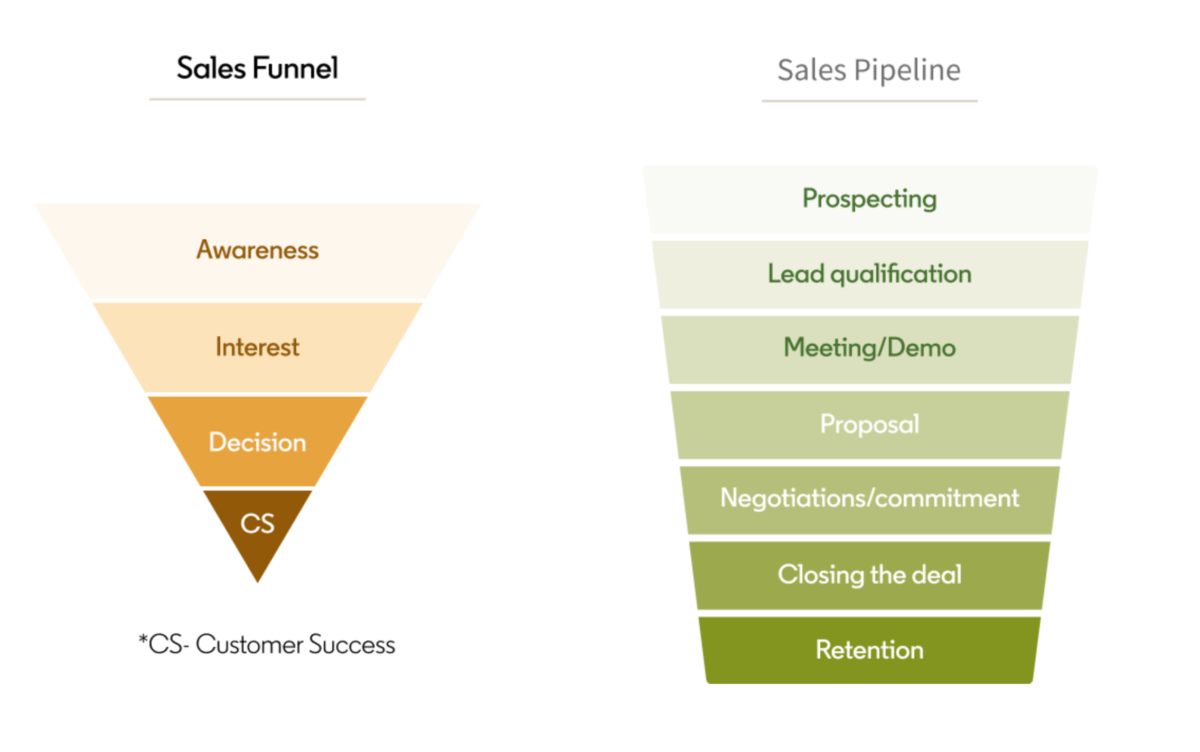
The fix is to treat MQL → SQL like a contract, not a vague “we’ll see.” Define stages in plain language:
- Lead: engaged, not qualified
- MQL: fits ICP + shows intent
- SQL: sales validated a real next step (need, timeline, stakeholder, or a scheduled meeting)
- Opportunity: a forecastable deal in your pipeline
Then build two practical guardrails. First, an SLA for speed-to-lead. High intent (demo/contact/pricing) should get a response fast—ideally within the hour during business time. Second, a consistent disposition system. If sales rejects a lead, there must be a reason code that marketing can act on (not ICP, no urgency, wrong region, budget mismatch, timing). That’s how you stop repeating the same mistakes.
This is also where alignment supports Singapore performance specifically. If you’re running B2B Lead Generation for Singapore campaigns, a clean handoff plus quick, relevant follow-up can be the difference between “nice lead volume” and “real, qualified meetings.”
One weekly habit makes this stick: a 30-minute revenue huddle where sales shares objections and outcomes, and marketing shares channel performance and intent trends. Less blame, more tuning. Over time, you’ll see higher MQL→SQL conversion, better pipeline quality, and a funnel that behaves like a system—not a lottery.
Measure What Moves Revenue—Funnel Metrics That Don’t Lie
Once your funnel is running, the temptation is to celebrate what’s easy to count: impressions, clicks, downloads, and “lead volume.” Those numbers can be useful, sure—but in Asia, they can also be dangerously misleading because buying cycles are longer and multi-touch journeys are common. The goal isn’t a busy funnel. It’s a funnel that reliably creates pipeline and closes revenue.
Start by tracking conversion and quality at every stage, not just at the top. These metrics keep sales and marketing aligned because they’re tied to outcomes both teams care about:
- ICP match rate (for MQLs and SQLs): are we attracting the right accounts?
- MQL → SQL conversion rate: are leads actually sales-ready or just engaged?
- SQL → Opportunity conversion rate: are sales conversations turning into real deals?
- Pipeline created by source: which channels create opportunities, not just leads?
- Win rate by source: which channels attract buyers who are ready and qualified?
- Sales cycle length by source: where do deals move faster or stall?
- Cost per opportunity (CPO): a more honest number than cost per lead (CPL)
If you’re prioritizing B2B Lead Generation for Singapore, this view becomes even more important. Singapore can produce high-quality pipeline, but only if you evaluate performance beyond early-stage engagement. A channel that delivers “cheap leads” but weak SQLs will quietly drain SDR time and inflate acquisition costs.
Attribution is where teams often overcomplicate things. Keep it practical: track first-touch (what started the relationship), last-touch (what triggered the meeting), and influenced touches (content/events that supported the deal). You don’t need perfect attribution to make better decisions—you need consistent tracking and a shared interpretation.
The Asia Funnel Flywheel—A Simple Two-Week Optimization Rhythm That Compounds Results
Funnels improve when teams treat them like a product: test, learn, ship improvements, repeat. The mistake most B2B teams make is waiting for quarterly reviews to fix obvious issues. In Asia, that lag is costly because market feedback shifts quickly—new entrants appear, budgets change, and decision criteria evolve.
A lightweight two-week optimization rhythm keeps momentum without chaos. Here’s a structure that works across markets and is especially effective for Singapore-led funnels:
Week 1: Diagnose what’s slowing down conversion
Pick one funnel “bottleneck” to focus on. Examples:
- High traffic but low landing page conversion
- Strong MQL volume but weak MQL → SQL conversion
- Plenty of SQLs but low SQL → opportunity progression
- Long sales cycles due to repeated objections (price, security, implementation)
Then review evidence, not opinions: call notes, email replies, meeting outcomes, and page-level analytics. This is where sales feedback becomes invaluable—marketing can’t see objections the way sales hears them live.
Week 2: Ship one meaningful improvement
Make one change that directly targets the bottleneck:
- Update landing copy to match the actual objections sales hears
- Swap the offer (e.g., from “ebook” to “ROI snapshot” or “assessment”)
- Tighten targeting (exclude low-fit segments, focus on high-performing verticals)
- Add a proof asset (case snippet, security one-pager, implementation timeline)
- Improve follow-up speed and build a “conversion kit” for SDRs
The key is focus. One strong improvement beats five shallow tweaks. Over 6–8 cycles, you’ll notice something powerful: your funnel doesn’t just get “better,” it becomes a flywheel. Better targeting attracts better accounts. Better content creates stronger intent. Better handoffs increase conversion. Better metrics guide smarter decisions. And suddenly, pipeline feels predictable.