
Introduction: Where Marketing Myths Go to Die
Singapore is not kind to inefficient marketing. Budgets are scrutinized, audiences are sophisticated, and performance gaps show up fast. In this environment, brands that rely on instinct, legacy playbooks, or surface-level analytics don’t just underperform—they get exposed. That’s why AI Marketing has shifted from a “nice-to-have” innovation to a non-negotiable growth lever.
This case study examines how a Singapore-based agency applied AI Marketing not as a buzzword, but as an operating system. The result was a 300% increase in ROI within six months—without ballooning budgets or adding headcount. No viral stunts. No shortcuts. Just disciplined execution powered by machine intelligence.
The reality is uncomfortable for many organizations. Human-led marketing alone cannot process the volume, velocity, and complexity of modern data. Campaigns now generate millions of signals across channels, devices, and timeframes. Expecting teams to manually extract insight from this chaos is unrealistic. This is precisely where AI Marketing earns its keep.
What follows is not theory. It is a grounded account of how data-driven systems replaced guesswork, how automation unlocked scale, and how strategic restraint delivered outsized returns. For leaders serious about performance, this is what modern marketing actually looks like.

The Client Reality: Strong Brand, Weak Leverage
The client entered this engagement with a recognizable brand and a solid product-market fit. What they lacked was leverage. Marketing spend kept rising, yet revenue growth lagged behind expectations. Conversion rates were inconsistent, attribution was unclear, and internal teams struggled to explain why certain campaigns worked while others quietly drained budget.
Like many organizations, they relied on static personas and backward-looking reports. Decisions were made monthly, sometimes quarterly—far too slow for a digital market that changes daily. Channels operated in silos. Paid media didn’t inform email. CRM data rarely influenced creative strategy. This fragmentation diluted impact and masked inefficiencies.
Leadership knew something had to change. The mandate was clear: improve ROI without increasing spend. Traditional optimizations had already been exhausted. More creatives didn’t help. More A/B tests delivered diminishing returns. What the business needed was a smarter way to decide—at scale.
That’s where AI Marketing entered the picture. Not as a replacement for the team, but as a force multiplier. The objective wasn’t to automate everything. It was to remove human bottlenecks from decision-making while keeping strategy firmly in human hands.
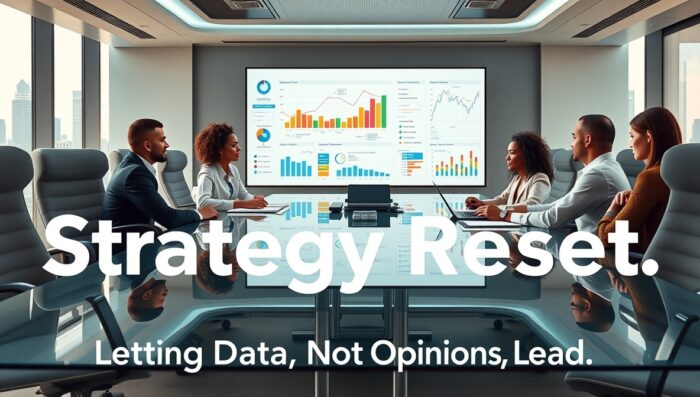
Strategy Reset: Letting Data, Not Opinions, Lead
The first strategic move was decisive: stop guessing. Audience definitions were rebuilt using behavioral data, not demographic stereotypes. Machine learning models continuously clustered users based on intent signals, engagement patterns, and likelihood to convert. These segments evolved in real time, reflecting how customers actually behaved—not how teams imagined they did.
Next came predictive intelligence. Instead of reacting to last month’s performance, the system forecasted future outcomes. Budgets shifted dynamically toward audiences and channels with the highest probability of return. Messaging was tailored based on predicted response, not creative preference.
This is where AI Marketing demonstrated its real value. Personalization moved beyond surface-level name insertion. Entire journeys—timing, content, offers—were optimized at the individual level. The system learned quickly, discarded underperforming variables, and doubled down on what worked.
Importantly, human oversight remained central. Strategy, brand voice, and ethical guardrails were defined by people. AI handled speed, scale, and pattern recognition. This balance prevented automation from becoming reckless while ensuring performance gains weren’t throttled by human limitations.
Execution Discipline: Where Most AI Initiatives Fail
Strategy means nothing without execution. The agency prioritized integration before optimization. CRM data, media platforms, analytics, and conversion tracking were unified into a single intelligence layer. No more conflicting reports. No more blind spots.
Automation was applied selectively. Bid management, budget reallocation, and performance alerts were handled by AI. Creative testing, narrative control, and long-term planning stayed human-led. This division of labor ensured efficiency without sacrificing judgment.
Campaigns were monitored continuously. Underperforming segments were cut quickly. High-performing cohorts received immediate investment. This real-time responsiveness is a defining strength of AI Marketing—and something manual teams simply cannot replicate.
The execution timeline was aggressive but controlled. Within two months, the system was live. Within three, performance curves diverged sharply from historical norms. There was no celebration of vanity metrics. Only revenue, acquisition cost, and lifetime value mattered.

Results That End the Conversation
Within six months, ROI increased by 300%. Cost per acquisition dropped by over 40%. Conversion rates across paid channels doubled. Email revenue per user more than tripled due to predictive timing and content optimization.
More importantly, performance became predictable. Forecasting accuracy improved, enabling leadership to plan growth with confidence. Marketing transformed from an expense to a controllable growth engine.
Attribution finally made sense. The business could clearly see which touchpoints drove revenue and which were noise. This clarity eliminated internal debates and accelerated decision-making.
These outcomes were not anomalies. They were the natural result of aligning strategy, data, and execution through AI Marketing.

Lessons Learned: The Uncomfortable Truths
First, AI amplifies discipline—not chaos. Poor data and vague objectives will produce poor results faster. Second, speed matters. Weekly optimization cycles are obsolete. Real-time learning is where advantage lies.
Third, trust is non-negotiable. Teams had to accept insights that contradicted intuition. This cultural shift was harder than the technical one. Finally, revenue must remain the north star. Engagement without financial impact is noise.
These lessons are hard—but they are repeatable.
Conclusion: The Cost of Standing Still
This case study makes one thing clear: AI Marketing is no longer optional for serious growth. In markets like Singapore, the gap between data-led organizations and intuition-led ones is widening fast.
The question is no longer whether AI works. It’s whether your organization is willing to change how decisions are made. Because while hesitation feels safe, it is quietly expensive.
And in modern marketing, inefficiency is the most dangerous cost of all.